My 40 Year High School Reunion apparently produced much in the way of fellowship and reminiscence, to the extent that one incorrigible troublemaker volunteered to compile a set of "High School Memories," noting that the class after ours has done so, but it was lame. This, of course, sends me back to the memory bin, trying to locate some non-lame memories, but I find the pickings pretty slender.
Partly this is due to my multiple lives during high school. I have lifeguard memories that occurred at that time, but those were from the Downtown Nashville YMCA. There were girls I dated, primarily from distant high schools, possibly owing to a fear of gossip, or the instinct of self-preservation that realizes that breaking up with someone who is in your English class is Very Rough on the System. There are a number of Forensic Club memories, but I can categorically attest to the basic lameness thereof.
Besides, the best memories are about mischief made, and I was such a sweet kid, really I was.
Still, I believe that I held some sort of record for being tossed out of Mr. R's 8th Grade class, which was either technically in High School because it was in the same building, or technically not, since it was still Jr. High School. Whatever. Mr. R was an ignorant twit, and 40+ years has not dimmed that assessment.
I will leave aside the times when he said foolish things like "Rock and Roll is a Communist Plot." I seldom bothered to call him on things that everyone knew were stupid. But when he told the class that Earth satellites stay in orbit by balancing between the gravitational attraction of the Earth and Moon, my calm demeanor vanished and I said something like, "That's idiotic." That got me a quick trip to the library (Oh, throw me in the briar patch, Mr. Detention).
Then there was the pop quiz on the Revolutionary War, where one of the questions was, "This man said, 'Don't give up the ship!'" Sadly, I knew that it was a dying quote from Captain James Lawrence during the War of 1812, and that said ship, in fact, was given up shortly thereafter (though the words became a slogan used in the Battle of Lake Eerie). R had, as so many before him, confused that saying with "I have not yet begun to fight," which was from John Paul Jones, the correct answer to the wrong question. I said, "I don't think you have the correct quote," and R said, "How do you know who I'm talking about?" So I levelly answered, "All I know is that John Paul Jones never said, 'Don't give up the ship.'" My fellow students' pencils scratched the answer that R had been looking for, and I, once again, was ejected from a class that was trying very hard to make me know less than I already knew.
Showing posts with label Nashville. Show all posts
Showing posts with label Nashville. Show all posts
Tuesday, July 8, 2008

Friday, June 13, 2008
An Other James
[On the occasion of my 40th year High School Reunion, which I will be attending by phone].
I was at a party once, attended mostly by SF fan types, and the subject of name changes came up. I asked the group how many of us had changed our “go by” names in some significant way since we were young. It turned out that something like ¾ of us had.
My own change was fairly major; I was “Pete” in high school, then “James” or “Jim” in college. The former had made sense to distinguish me from my Dad (I’m actually a “Junior”), but I’d never cared for Pete as a name, and college is all about reinvention. I eventually had to settle for "Jim" because so many people just automatically shorten the name unless you're a bore about it. I did, however, draw the line at "Jimmy." There is one person in the world who is allowed to call me Jimmy, and he goes by Jimmy, and he's older than I am, so I can't/won't object.
So the guy I knew as James in high school, and who still goes by that name, knew me as Pete. He didn’t like me, and vice versa. I was what was known then as a “brain,” while he was a “hood,” short for “hoodlum” back then. (Now it's short for "neighborhood" and comes from African American slang). Truth to tell, in our white bread suburb, before drugs, the counter-culture, and the flood of semi-automatic weapons, “hoods” were usually pretty tame.
Which isn’t to say that they didn’t make trouble, nor that I had no trouble with them. Indeed, three times a week, just as school was letting out, I’d be down on the corner waiting for the bus that took me to the downtown YMCA, where I was a lifeguard and sometimes gym class leader for younger kids. But there on the bus bench, I was a target. Sometimes the rowdies would just yell at me; sometimes they would throw things like wadded up paper, empty cartons, or occasionally, half empty soda cups, or empty soda cans.
One day, after a week where it seemed like the barrage had been escalating, I reached down, grabbed a rock, and threw it back. It was a pretty heavy rock. I still remember the rather sickening thud it made against the car door.
The car pulled over and James got out and began stomping in my direction. He outweighed me by probably 40 or 50 pounds and I’m sure he expected me to run. I did not. Instead, I said something phony tough, like “Come on!”
I’m not sure what I’d have done if he’d followed through. I wrestled at the Y, (but within my weight class!), so I’d have probably gone in low, hoping for a leg grab to upend him. Most probably, he’d have beaten the crap out of me. But it never came to that. I was a brain and he was a hood, and it was a busy street, and plenty of people had seen the first object thrown at me. Even if he won the fight, he would have lost, because hoods get into trouble pounding on guys smaller than they are, especially if the smaller guy actually puts up a fight.
So he turned, said something that I didn’t catch, got back into the car, and he and his buddies drive off.
They left me alone after that.
Several years later, on my last trip back to Donelson before my folks moved away, my Dad bought me a $350 used car as a present to take back to graduate school. As I was leaving town, I stopped off for gas, and there was James, working at the gas station. I was enough of a snobbish snot to take pleasure in the thought of him being stuck in a dead end job for the rest of his life.
My high school class hasn’t had many reunions, partly because what had been our high school is now a middle school, so there’s no administrative push for reunions. But we did have a 20 year reunion, and I won the prizes for “came farthest” (you’d almost need to leave the continental U.S. to beat me), and “most changed,” which was basically my classmates voting on whose appearance had changed the most. The still long hair and beard carried the day. The guy voted “least changed” did indeed still look a lot like he did in high school; I just didn’t remember him as looking as gay as he obviously now is.
At the first party on Friday night, held in the “Don’s Den” building that was the after-the-game party place that I’d actually never been to before, I saw James. He looked very good, with no major weight gains, smile on his face, and a pretty wife nearby. “Hi,” I said (or something equally clever). “What are you doing these days?”
“Actually, Pete,” he said, “I’m a cop.”
Later, I learned that he was not only a cop, but he was a major honcho for the Nashville Police Kids Summer Camp (or something like that) the sort of place where you send kids who are starting to maybe be a problem, in hopes that some summer sunshine, clean air, and good role models will straighten them out. So that’s part of his job now: being a good role model.
Okay, okay, it’s almost as stereotypical as the gas station gig. Wild kid turns his life around and becomes a policeman. But narratives work like that. At some point, James had to decide who he wanted to become, and he chose to be like the authority figures he’d had experience with, the ones who had probably more than once cut him slack when he needed it, the ones who’d been there themselves in a previous turn of the narrative wheel.
James had been a major driving force behind organizing the reunion; he’d wanted to show the rest of us he’d turned out well, good family, good job, pillar of the community. And I liked him, and I liked that he was proud of what he’d become, and I liked that he wanted to show it off,
We get plenty of narratives about the curses that are passed down from the older generations to the younger: poverty, pedophilia, drunkenness, drug addiction, child and spousal abuse. I take from James the counter-narrative, that the right mix of kindness and authority is also contagious, at least if supplied to the right person.
I once took it as a major sign of my own personal evolution when I realized that I really didn’t believe that the world’s problems would disappear if everyone was like me. There are plenty of people in the world who aren’t much like me at all, who add to the world and my appreciation if it. James is one of them, and I hope he prospers.
I was at a party once, attended mostly by SF fan types, and the subject of name changes came up. I asked the group how many of us had changed our “go by” names in some significant way since we were young. It turned out that something like ¾ of us had.
My own change was fairly major; I was “Pete” in high school, then “James” or “Jim” in college. The former had made sense to distinguish me from my Dad (I’m actually a “Junior”), but I’d never cared for Pete as a name, and college is all about reinvention. I eventually had to settle for "Jim" because so many people just automatically shorten the name unless you're a bore about it. I did, however, draw the line at "Jimmy." There is one person in the world who is allowed to call me Jimmy, and he goes by Jimmy, and he's older than I am, so I can't/won't object.
So the guy I knew as James in high school, and who still goes by that name, knew me as Pete. He didn’t like me, and vice versa. I was what was known then as a “brain,” while he was a “hood,” short for “hoodlum” back then. (Now it's short for "neighborhood" and comes from African American slang). Truth to tell, in our white bread suburb, before drugs, the counter-culture, and the flood of semi-automatic weapons, “hoods” were usually pretty tame.
Which isn’t to say that they didn’t make trouble, nor that I had no trouble with them. Indeed, three times a week, just as school was letting out, I’d be down on the corner waiting for the bus that took me to the downtown YMCA, where I was a lifeguard and sometimes gym class leader for younger kids. But there on the bus bench, I was a target. Sometimes the rowdies would just yell at me; sometimes they would throw things like wadded up paper, empty cartons, or occasionally, half empty soda cups, or empty soda cans.
One day, after a week where it seemed like the barrage had been escalating, I reached down, grabbed a rock, and threw it back. It was a pretty heavy rock. I still remember the rather sickening thud it made against the car door.
The car pulled over and James got out and began stomping in my direction. He outweighed me by probably 40 or 50 pounds and I’m sure he expected me to run. I did not. Instead, I said something phony tough, like “Come on!”
I’m not sure what I’d have done if he’d followed through. I wrestled at the Y, (but within my weight class!), so I’d have probably gone in low, hoping for a leg grab to upend him. Most probably, he’d have beaten the crap out of me. But it never came to that. I was a brain and he was a hood, and it was a busy street, and plenty of people had seen the first object thrown at me. Even if he won the fight, he would have lost, because hoods get into trouble pounding on guys smaller than they are, especially if the smaller guy actually puts up a fight.
So he turned, said something that I didn’t catch, got back into the car, and he and his buddies drive off.
They left me alone after that.
Several years later, on my last trip back to Donelson before my folks moved away, my Dad bought me a $350 used car as a present to take back to graduate school. As I was leaving town, I stopped off for gas, and there was James, working at the gas station. I was enough of a snobbish snot to take pleasure in the thought of him being stuck in a dead end job for the rest of his life.
My high school class hasn’t had many reunions, partly because what had been our high school is now a middle school, so there’s no administrative push for reunions. But we did have a 20 year reunion, and I won the prizes for “came farthest” (you’d almost need to leave the continental U.S. to beat me), and “most changed,” which was basically my classmates voting on whose appearance had changed the most. The still long hair and beard carried the day. The guy voted “least changed” did indeed still look a lot like he did in high school; I just didn’t remember him as looking as gay as he obviously now is.
At the first party on Friday night, held in the “Don’s Den” building that was the after-the-game party place that I’d actually never been to before, I saw James. He looked very good, with no major weight gains, smile on his face, and a pretty wife nearby. “Hi,” I said (or something equally clever). “What are you doing these days?”
“Actually, Pete,” he said, “I’m a cop.”
Later, I learned that he was not only a cop, but he was a major honcho for the Nashville Police Kids Summer Camp (or something like that) the sort of place where you send kids who are starting to maybe be a problem, in hopes that some summer sunshine, clean air, and good role models will straighten them out. So that’s part of his job now: being a good role model.
Okay, okay, it’s almost as stereotypical as the gas station gig. Wild kid turns his life around and becomes a policeman. But narratives work like that. At some point, James had to decide who he wanted to become, and he chose to be like the authority figures he’d had experience with, the ones who had probably more than once cut him slack when he needed it, the ones who’d been there themselves in a previous turn of the narrative wheel.
James had been a major driving force behind organizing the reunion; he’d wanted to show the rest of us he’d turned out well, good family, good job, pillar of the community. And I liked him, and I liked that he was proud of what he’d become, and I liked that he wanted to show it off,
We get plenty of narratives about the curses that are passed down from the older generations to the younger: poverty, pedophilia, drunkenness, drug addiction, child and spousal abuse. I take from James the counter-narrative, that the right mix of kindness and authority is also contagious, at least if supplied to the right person.
I once took it as a major sign of my own personal evolution when I realized that I really didn’t believe that the world’s problems would disappear if everyone was like me. There are plenty of people in the world who aren’t much like me at all, who add to the world and my appreciation if it. James is one of them, and I hope he prospers.
Tuesday, May 6, 2008
Listening to the Radio Late at Night
I’m sure there are people whose memories are better than mine; I just haven’t met many. On the other hand, I’m sure that some of my self-perception of having a good memory is illusory. One does not remember what one forgets, after all. Still, I have many clear and verifiable memories of events, personal encounters, books read, TV shows watched etc. that has impressed enough people for me to grasp that most people don’t have this sort of access to their past.
Most people do remember where they were, what they were doing, etc. at times of great import, like 9/11, the Kennedy Assassination (assuming you were actually alive then), the Fall of Saigon, and so forth. One feature of my own situation may simply be that I have a lot of marker events in my childhood, so my memories got organized at the same time I was acquiring them. Maybe, self-centered dweeb that I am, I consider my own life events to be as important to me as the world shaking events that others remember.
One type of such event is moving, changing houses, which changes the entire “atmosphere” of a memory. That can sometime deceive, as when you go back for a visit to the old place, to see old friends, but usually the surroundings, the frame of the memory is a pretty good test.
In the spring of 1954, my family moved from a house we rented on McRory Creek Road to 2935 Ironwood Drive in Donelson, which was a move of only a few miles, but it felt huge. In at least one way it was huge; McRory Creek Rd. was semi-rural, while Donelson was definitely sub-urban. At least the Post Office thought as much; the McRory Creek residence was a rural route; the Donelson house had an actual address.
Mapquest tells me that McRory Creek Road has been swallowed by Nashville Intl. Airport. At that time it was Berry Field Air Base, where my dad worked as a radio operator. The house in Donelson, on the other hand, was still there the last time I was there only a few years ago.
So I have a set of memories that are bounded in time by the move. Any memory I have of McRory Creek Rd. happened before I turned 4. I remember my 3rd birthday party; that’s probably close to the limit of my memory. I’ve heard people who claim that they have memories from before they were 3, but, according to developmental psychology, such claims are dubious, though I’ll allow that great trauma might linger in memory longer than other forgotten images of childhood.
“I have a friend whose father every week took him to the toolshed to sandpaper his ass. He’s been trying for 30 years to repress those memories, without success.” – Merle Kessler.
On clear memory I have from the McRory Creek house was of our old radio, one of those huge, jukebox looking affairs, late at night bringing forth music. At least the memory feels late at night, dark, no one else around, calm, private. My best guess is that the radio got left on somehow and I got up in the middle of the night. I had an early bedtime when I was a child.
The song I remember is “Your Cheatin’ Heart” by Hank Williams, a song that seems like it should be angry, or scornful, certainly the lyrics have that in them, but the delivery conveys more about the hurt and loneliness that the anger is trying unsuccessfully to mask.
I remember both “Chicken Road” by Tennessee Ernie Ford, and “The Wayward Wind,” by Gogi Grant (and later by Patsy Cline, but the Grant original is the one I remember), from the Donelson House. The "Wayward Wind" is from 1956; I may not have even heard the Ford song on the radio, since my dad had the record. But it felt like a late night song.
So did “Heartbreak Hotel” which made me an instant Elvis fan at the ripe age of 6. That one is tagged as heard first in Illinois, so that would have been from a trip to my grandparents in early summer of 1956, a couple of months after the release of the record. I slept upstairs, where no one could hear the radio if you played it real low, late into the night.
There’s a feel about late night music radio that you don’t get any other place. McLuhan famously divided media into “hot” and “cool,” with “hot” meaning (more or less, and McLuhan was nothing if not slippery and ambiguous) “high definition” and “cool” meaning “low definition,” both indicating how much participation the medium required. He did, however, classify television as “cool” (as compared to movies, perhaps), but maybe that was a mistake.
In any case, radio gives you a sense of “not from around here.” Television puts everything in your living room, radio shifts your sense of presence to the Great Beyond. Late night radio music is as much a signpost to the World Out There as the train whistle or the truck horn as it moves past your small town headed to who-knows-where. Wherever it’s heading, there are adventures to be had, love, fame, success, whatever it is that you want, and you can’t get where you are.
A lot of songs lack that quality of longing, but there are so many that have it. Glen Campbell’s “By the Time I Get to Phoenix” pulled me from sleep one night, as did “For What It’s Worth” by Buffalo Springfield. The Beatles had a slew of them, from “Strawberry Fields” and “I am the Walrus” to “Eleanor Rigby.” The Rolling Stones came through first with “2000 Light Years from Home” and “Paint it Black” then topped themselves with “Gimme Shelter.” I’m not going to try to make a catalog of Motown late night songs, because Ray Charles alone would run to excess. Even uptempo song can be late night radio songs, like “Heat Wave” by Martha and the Vandellas.
The choice spots at WRPI, the ones that had the most prestige were late night, the signoff slots. You didn’t have to follow the format, and the show was open-ended, with a scheduled signoff time that you could go as far past as you liked. Sometimes the DJ would go until 3 or 4 in the morning on weekends, and many is the time I’d listen to radio in bed, thinking I’d turn it off as soon as something came on that I didn’t like, and I’d wind up listening until the signal went dead. Firesign Theater’s “Echo Poem,” “Legend Days are Over,” by Beaver and Krause, “To is a Preposition, Come is a Verb” by Lenny Bruce, you just don’t turn it off when you’re listening to those.
I’ve frequently put The Cowboy Junkies, The Trinity Sessions on the iPod rotation. “I’m So Lonesome I Could Cry” is another late night Hank Williams song of loss and despair. But there is an affirmation to it, as there is in so many of them, an acknowledgment that there are things worth having and living for. Something worth having is worth grieving over at its loss, late at night in the dark, with the music whispered in your ear by a sweet voice from the Great Beyond.
Most people do remember where they were, what they were doing, etc. at times of great import, like 9/11, the Kennedy Assassination (assuming you were actually alive then), the Fall of Saigon, and so forth. One feature of my own situation may simply be that I have a lot of marker events in my childhood, so my memories got organized at the same time I was acquiring them. Maybe, self-centered dweeb that I am, I consider my own life events to be as important to me as the world shaking events that others remember.
One type of such event is moving, changing houses, which changes the entire “atmosphere” of a memory. That can sometime deceive, as when you go back for a visit to the old place, to see old friends, but usually the surroundings, the frame of the memory is a pretty good test.
In the spring of 1954, my family moved from a house we rented on McRory Creek Road to 2935 Ironwood Drive in Donelson, which was a move of only a few miles, but it felt huge. In at least one way it was huge; McRory Creek Rd. was semi-rural, while Donelson was definitely sub-urban. At least the Post Office thought as much; the McRory Creek residence was a rural route; the Donelson house had an actual address.
Mapquest tells me that McRory Creek Road has been swallowed by Nashville Intl. Airport. At that time it was Berry Field Air Base, where my dad worked as a radio operator. The house in Donelson, on the other hand, was still there the last time I was there only a few years ago.
So I have a set of memories that are bounded in time by the move. Any memory I have of McRory Creek Rd. happened before I turned 4. I remember my 3rd birthday party; that’s probably close to the limit of my memory. I’ve heard people who claim that they have memories from before they were 3, but, according to developmental psychology, such claims are dubious, though I’ll allow that great trauma might linger in memory longer than other forgotten images of childhood.
“I have a friend whose father every week took him to the toolshed to sandpaper his ass. He’s been trying for 30 years to repress those memories, without success.” – Merle Kessler.
On clear memory I have from the McRory Creek house was of our old radio, one of those huge, jukebox looking affairs, late at night bringing forth music. At least the memory feels late at night, dark, no one else around, calm, private. My best guess is that the radio got left on somehow and I got up in the middle of the night. I had an early bedtime when I was a child.
The song I remember is “Your Cheatin’ Heart” by Hank Williams, a song that seems like it should be angry, or scornful, certainly the lyrics have that in them, but the delivery conveys more about the hurt and loneliness that the anger is trying unsuccessfully to mask.
I remember both “Chicken Road” by Tennessee Ernie Ford, and “The Wayward Wind,” by Gogi Grant (and later by Patsy Cline, but the Grant original is the one I remember), from the Donelson House. The "Wayward Wind" is from 1956; I may not have even heard the Ford song on the radio, since my dad had the record. But it felt like a late night song.
So did “Heartbreak Hotel” which made me an instant Elvis fan at the ripe age of 6. That one is tagged as heard first in Illinois, so that would have been from a trip to my grandparents in early summer of 1956, a couple of months after the release of the record. I slept upstairs, where no one could hear the radio if you played it real low, late into the night.
There’s a feel about late night music radio that you don’t get any other place. McLuhan famously divided media into “hot” and “cool,” with “hot” meaning (more or less, and McLuhan was nothing if not slippery and ambiguous) “high definition” and “cool” meaning “low definition,” both indicating how much participation the medium required. He did, however, classify television as “cool” (as compared to movies, perhaps), but maybe that was a mistake.
In any case, radio gives you a sense of “not from around here.” Television puts everything in your living room, radio shifts your sense of presence to the Great Beyond. Late night radio music is as much a signpost to the World Out There as the train whistle or the truck horn as it moves past your small town headed to who-knows-where. Wherever it’s heading, there are adventures to be had, love, fame, success, whatever it is that you want, and you can’t get where you are.
A lot of songs lack that quality of longing, but there are so many that have it. Glen Campbell’s “By the Time I Get to Phoenix” pulled me from sleep one night, as did “For What It’s Worth” by Buffalo Springfield. The Beatles had a slew of them, from “Strawberry Fields” and “I am the Walrus” to “Eleanor Rigby.” The Rolling Stones came through first with “2000 Light Years from Home” and “Paint it Black” then topped themselves with “Gimme Shelter.” I’m not going to try to make a catalog of Motown late night songs, because Ray Charles alone would run to excess. Even uptempo song can be late night radio songs, like “Heat Wave” by Martha and the Vandellas.
The choice spots at WRPI, the ones that had the most prestige were late night, the signoff slots. You didn’t have to follow the format, and the show was open-ended, with a scheduled signoff time that you could go as far past as you liked. Sometimes the DJ would go until 3 or 4 in the morning on weekends, and many is the time I’d listen to radio in bed, thinking I’d turn it off as soon as something came on that I didn’t like, and I’d wind up listening until the signal went dead. Firesign Theater’s “Echo Poem,” “Legend Days are Over,” by Beaver and Krause, “To is a Preposition, Come is a Verb” by Lenny Bruce, you just don’t turn it off when you’re listening to those.
I’ve frequently put The Cowboy Junkies, The Trinity Sessions on the iPod rotation. “I’m So Lonesome I Could Cry” is another late night Hank Williams song of loss and despair. But there is an affirmation to it, as there is in so many of them, an acknowledgment that there are things worth having and living for. Something worth having is worth grieving over at its loss, late at night in the dark, with the music whispered in your ear by a sweet voice from the Great Beyond.
Saturday, April 26, 2008
Small Towns
I grew up in a suburb of Nashville, Tennessee, but I both entered and exited grade school in small towns in North Carolina and Kentucky, respectively.
I began the first grade (“pre-school” not being an operative concept in the 1950s South), in Summerfield, North Carolina. It’s now a bedroom community for Greensboro, and it’s not really that far, only 10-15 miles, but the roads back then weren’t that good, and Summerfield felt very rural. By “rural” I mean that there was a tobacco farm next door, a mule pen maybe 40 yards from our back porch, and the first money I ever actually earned (as opposed to little “tips” for being cute or helpful) was at a “tobacco stringing party” where the whole neighborhood tied harvested tobacco leaves to sticks, to be hung in the curing sheds.
There was also a General Store across the street, and across an open field and parking lot was a drugstore, complete with soda fountain. I must have charmed the manager of the drugstore, because he made me ice cream cones with chocolate syrup and peanuts and charged me far less than usual because I’d been buying Drumsticks at the General Store. Or maybe he was having some weird kind of competition with the General Store. In any case, I spent large amounts of time in the drugstore, reading comic books and magazines, and the sight of a pre-schooler bookworm was probably just cute as all get-out.
When we first moved to the area, we lived in Greensboro for a while. I’m not absolutely sure if Dad worked in Greensboro or Winston-Salem. If it was the latter, then we moved so he’d be closer to work, but I think he worked in Greensboro. I can only remember going back to Greensboro from Summerfield a couple of times, to see our friends the Appels; the son Steve, had been my “best friend” for maybe all of the three months we lived there. Steve’s sister was mentally handicapped, that may have been the euphemism for “retarded” then, although “retarded” may have been the euphemism. All I can remember about her was that she was sweet and shy, saying very little, and she had a lot of health problems. I know now that it’s very rare for health issues to be confined to the “mental;” there are usually profound developmental malfunctions accompanying most mental handicaps.
I don’t remember much about school in Summerfield; we weren’t there very long. There were two “alpha males” in my class, me and a guy named Terry, and we got along. It was actually a trio that included a girl named Carol (these are very treacherous memories, I acknowledge; I’m not positive that was her name). It being the Baby Boom and all, the school got some “Portables,” pre-fab classrooms, installed a month or two after we started school, and there was a split-grade 1st and 2nd grade class formed, with the brightest of the first graders put into it. I would have gone into it, but it was already known that we were about to move back to Nashville, Dad’s transfer not having worked to anyone’s satisfaction, so our trio got broken up and Carol and Terry left. I had only a few weeks to get used to that, then we moved back to Donelson, and I became “the new kid in school” despite having lived in Donelson for years.
As an aside, having reminded myself of Terry and Carol, I don’t ever recall passing through a “girls are icky” stage. I will acknowledge being terribly annoyed at times by my younger sister, but I’ll stipulate that I was probably even more annoying to her. But one of the pains of my adolescence was watching various girls that I’d substantially liked deliberately dumbing themselves down in accordance with “community standards.” At the time I thought it was because I was in the South; now I acknowledge the more general problem. Still, my experience suggests that it’s worst in the South.
Anyway, Donelson Elementary gave way to a new, much closer school, Hickman Elementary, which I left behind about six weeks into my Sixth Grade year. This move was to Russellville, Kentucky, where Dad had found a job managing a bowling alley (that dates me, I think; they call them “lanes” now). This was definitely one of those “small town gentry” places that John Barnes talks about; the business failed after a year basically because the man who’d purchased it hadn’t kissed the proper feet, and the local Men of Influence wouldn’t sponsor leagues, which are the lifeblood of a bowling establishment.
When my sister and I entered school, my folks were told (condescendingly), that the school was organized on a “three track” system, not really separate classes for “A,” “B,” and “C” students, but, well, that was how it actually was; they just didn’t call it that. And they’d found that transfers from Tennessee schools were “usually a bit behind” where the same grade Kentucky students were. So they placed Marilyn and me in the middle (B) group, and said that if we had any trouble keeping up, they’d move us back to the slower (C) group for a while. Then if we caught up, we could move back to the average group.
A week later, both of us were moved to the advanced classes; I spent the entire year more or less sitting in the back row, reading the World Book Encyclopedia and occasionally giving demonstrations to the class about such things as the destructive distillation of wood or writing short stories and little science fiction plays. My sixth grade teacher, very wisely, God bless her, realized quickly that she had a mutant on her hands and didn’t try to get in my way. As long as I turned in the assignments and didn’t disrupt class (well, the wood distillation was a little disruptive, in the sense that it stank up the place), she didn’t try to rein me in.
The school was also very musical, with the music teacher being a real power in the place, and musical numbers being a common entertainment at school assemblies. I had a good voice, but no musical training beyond church choir (no snide remarks, now), so it was one place that I had the unusual comfort of not being a standout (phys ed was another; I was pretty average except in things that they didn't pay attention to, like swimming). On the other hand, I’d have liked to learn to read music, and they didn’t teach that, for some reason.
I’d already turned into a science geek, making some of my first buddies by telling them about the difference between alpha, beta, and gamma radiation while we were discussing some of the first issues of The Hulk. And there was an older student, I think in high school, who was also a chemistry geek—gads, he actually had access to real nitric acid—and I expect we’d have done some interesting, if dangerous, stuff if the family had stayed in town.
After a year, though, it was back to Donelson, for an entire 7-12 sequence at Donelson High School. High school is itself a simulacrum of a small town, and, as many have noted, everything we do later in life reflects the tribal customs that we all learned in High School. But that another essay or twelve, and if I access this particular file structure much longer, I’m going to get maudlin, if I haven’t already.
I began the first grade (“pre-school” not being an operative concept in the 1950s South), in Summerfield, North Carolina. It’s now a bedroom community for Greensboro, and it’s not really that far, only 10-15 miles, but the roads back then weren’t that good, and Summerfield felt very rural. By “rural” I mean that there was a tobacco farm next door, a mule pen maybe 40 yards from our back porch, and the first money I ever actually earned (as opposed to little “tips” for being cute or helpful) was at a “tobacco stringing party” where the whole neighborhood tied harvested tobacco leaves to sticks, to be hung in the curing sheds.
There was also a General Store across the street, and across an open field and parking lot was a drugstore, complete with soda fountain. I must have charmed the manager of the drugstore, because he made me ice cream cones with chocolate syrup and peanuts and charged me far less than usual because I’d been buying Drumsticks at the General Store. Or maybe he was having some weird kind of competition with the General Store. In any case, I spent large amounts of time in the drugstore, reading comic books and magazines, and the sight of a pre-schooler bookworm was probably just cute as all get-out.
When we first moved to the area, we lived in Greensboro for a while. I’m not absolutely sure if Dad worked in Greensboro or Winston-Salem. If it was the latter, then we moved so he’d be closer to work, but I think he worked in Greensboro. I can only remember going back to Greensboro from Summerfield a couple of times, to see our friends the Appels; the son Steve, had been my “best friend” for maybe all of the three months we lived there. Steve’s sister was mentally handicapped, that may have been the euphemism for “retarded” then, although “retarded” may have been the euphemism. All I can remember about her was that she was sweet and shy, saying very little, and she had a lot of health problems. I know now that it’s very rare for health issues to be confined to the “mental;” there are usually profound developmental malfunctions accompanying most mental handicaps.
I don’t remember much about school in Summerfield; we weren’t there very long. There were two “alpha males” in my class, me and a guy named Terry, and we got along. It was actually a trio that included a girl named Carol (these are very treacherous memories, I acknowledge; I’m not positive that was her name). It being the Baby Boom and all, the school got some “Portables,” pre-fab classrooms, installed a month or two after we started school, and there was a split-grade 1st and 2nd grade class formed, with the brightest of the first graders put into it. I would have gone into it, but it was already known that we were about to move back to Nashville, Dad’s transfer not having worked to anyone’s satisfaction, so our trio got broken up and Carol and Terry left. I had only a few weeks to get used to that, then we moved back to Donelson, and I became “the new kid in school” despite having lived in Donelson for years.
As an aside, having reminded myself of Terry and Carol, I don’t ever recall passing through a “girls are icky” stage. I will acknowledge being terribly annoyed at times by my younger sister, but I’ll stipulate that I was probably even more annoying to her. But one of the pains of my adolescence was watching various girls that I’d substantially liked deliberately dumbing themselves down in accordance with “community standards.” At the time I thought it was because I was in the South; now I acknowledge the more general problem. Still, my experience suggests that it’s worst in the South.
Anyway, Donelson Elementary gave way to a new, much closer school, Hickman Elementary, which I left behind about six weeks into my Sixth Grade year. This move was to Russellville, Kentucky, where Dad had found a job managing a bowling alley (that dates me, I think; they call them “lanes” now). This was definitely one of those “small town gentry” places that John Barnes talks about; the business failed after a year basically because the man who’d purchased it hadn’t kissed the proper feet, and the local Men of Influence wouldn’t sponsor leagues, which are the lifeblood of a bowling establishment.
When my sister and I entered school, my folks were told (condescendingly), that the school was organized on a “three track” system, not really separate classes for “A,” “B,” and “C” students, but, well, that was how it actually was; they just didn’t call it that. And they’d found that transfers from Tennessee schools were “usually a bit behind” where the same grade Kentucky students were. So they placed Marilyn and me in the middle (B) group, and said that if we had any trouble keeping up, they’d move us back to the slower (C) group for a while. Then if we caught up, we could move back to the average group.
A week later, both of us were moved to the advanced classes; I spent the entire year more or less sitting in the back row, reading the World Book Encyclopedia and occasionally giving demonstrations to the class about such things as the destructive distillation of wood or writing short stories and little science fiction plays. My sixth grade teacher, very wisely, God bless her, realized quickly that she had a mutant on her hands and didn’t try to get in my way. As long as I turned in the assignments and didn’t disrupt class (well, the wood distillation was a little disruptive, in the sense that it stank up the place), she didn’t try to rein me in.
The school was also very musical, with the music teacher being a real power in the place, and musical numbers being a common entertainment at school assemblies. I had a good voice, but no musical training beyond church choir (no snide remarks, now), so it was one place that I had the unusual comfort of not being a standout (phys ed was another; I was pretty average except in things that they didn't pay attention to, like swimming). On the other hand, I’d have liked to learn to read music, and they didn’t teach that, for some reason.
I’d already turned into a science geek, making some of my first buddies by telling them about the difference between alpha, beta, and gamma radiation while we were discussing some of the first issues of The Hulk. And there was an older student, I think in high school, who was also a chemistry geek—gads, he actually had access to real nitric acid—and I expect we’d have done some interesting, if dangerous, stuff if the family had stayed in town.
After a year, though, it was back to Donelson, for an entire 7-12 sequence at Donelson High School. High school is itself a simulacrum of a small town, and, as many have noted, everything we do later in life reflects the tribal customs that we all learned in High School. But that another essay or twelve, and if I access this particular file structure much longer, I’m going to get maudlin, if I haven’t already.
Friday, March 21, 2008
Day Labor
The summer after my freshman year in college, I could not return to my former job of lifeguard, because those jobs are lined up well in advance of summer and I was a thousand miles away at school, making job hunting in Nashville somewhat impractical. When I got back to Nashville, I began a job search, and good luck at finding a good summer job when you begin the second week in June.
I first had a brief, abortive attempt at working the graveyard shift in a supermarket, restocking shelves, during which time I learned something about the music of Jimmy Rogers, because that was what was on the station the store PA system radio was tuned to. I also learned to not use the box cutter on the sugar bags. Then I was laid off to make room for some friend of the family of the night manager.
After that, I tried earning some money via day labor, through Manpower Incorporated one of the first temp job agencies. Again, minimum wage, and sometimes the jobs lasted no more than a single day.
The best job I had during that time was driving the office mail run for Genesco. In the days before email and such, all interoffice communication was through those weird little brown envelopes with the holes in them that were closed by the red strings wrapped around the other red thing that I've never learned the name of. Genesco had a downtown office and one out on Murfreesboro Road, and maybe another drop spot, my memory fails a bit here. The job consisted of driving around one big circuit, dropping off a packet of interoffice mail and picking one up, no interaction with other people, except the occasional smiling receptionist, and listening to the radio as I threaded through the traffic.
I'd have loved to have had that job for the whole summer, but I expect I was just a vacation fill-in for the regular guy, whose family knew the manager or something. Not that I'm still bitter about Tennessee hiring practices from 40 years ago or anything.
Far and away the worst job I had during the Manpower summer was the one that involved unloading the logs from the box car. That was a one-day special, thank god. The logs were destined to become railway ties, if memory serves, and they were cedar, or so I think we were told. You couldn't have proved it by me, since wherever they'd been harvested had been wet, muddy, and now the dirt was caked on them to considerable depth, black and powdery, perfect for rubbing into the skin, hair, or dispersing into the air inside the boxcars, like black smoke.
Outside it was a typical Tennessee summer day, maybe in the mid-80s. Inside the box car it was considerably hotter, approaching sauna temperature. Our sweat mixed with the black powder dirt and covered us with salty mud in the first few minutes of the job. There was water to be had, and we used it liberally, both to drink and then to just pour over ourselves, washing some of the mud off, to be replaced almost immediately, by more mud. Not to get too gross, but we were spitting mud by midmorning, and blowing your nose produced black discharge.
But what the hell, it was only one day.
The day had begun with a ride out to the site with three other guys, all older than me by a fair bit. The driver was maybe in his mid-thirties with a sort of "all over beer belly" if that makes sense. He talked about his band, a bar band from the sounds of it. They did a lot of Buddy Holly and Chuck Berry songs, with an occasional Elvis cover tossed in. It sounded like fun.
The next guy was a little older and scrawny. He told us that he preferred to work "janitorial," which I understood a lot better by the end of the day.
Rounding out our quartet was a middle aged black man who slept most of the way out, obviously a bit hung over. I think he was older than the other two; he certainly seemed older, and more worn out, or maybe worn down. I do not recall my other companions treating him with any disrespect, nor, to the best of my recollection, did I. We were, after all, in the same boat, or at least the same beat up old car.
We arrived at the work site at about the same time as another car from Manpower, and that one included the manager, whose job it was to synch up with the work site boss and get us all started. However, the work site manager, the guy representing the guys who were paying the bills, wasn't there, so the Manpower guy went off in search of him. It was still morning cool, though the sun was beginning to make its presence felt, and we looked around at the boxcars and the flatbed trucks that the logs were to be loaded onto, and, well, then we looked around some more.
At one point the black man, who'd wakened by now, but was still bleary eyed, came over to me and asked, "If the man don't show up, will you make sure we all get paid?"
I think I stammered something about how I'd do my best, or whatever, but the seeming weirdness of the request roiled my brain a bit. Me? What kind of grease did I have with the system? I was as clueless as I could be, and just passing through, so to speak. Fortunately, I didn't have much time to think about it, as our boss and their boss showed up pretty soon thereafter, and set out the work orders. I think they decided that the black guy was maybe too fragile to stand the hot work, so they took him elsewhere, I hope to do something to earn his pay for the day, but I never saw him again so I cannot report.
I've met broken creatures in my life. I once saw an institutionalized woman who talked of nothing but the wires that had been installed inside of her. There was a guy in Berkeley in the 1970s, known as "Serge, the Microbe Man," who would stand on a street corner and babble strange theories about organized crime bosses and "direct light encounters." Too much acid was the story told about Serge, who'd once been a promising student in physics. I've met meth addicts so far gone that they seemed like meat ghosts, no souls left, just reflexive need and motion. I've known people so depressed that they could barely find the effort to breathe.
The man who asked my for my help, help I really could not even think of how to deliver, he was not as broken as any of these other folks. He seemed more defeated than broken. Yes, I'm sure he was probably alcoholic, and maybe he'd have been better off if he quit the drinking. Or maybe he was just circling the drain, and trying to make the pain less intense.
But why me? I've thought about it over the years, and the best I can come up with is that I was still rising, still someone upon whom fortune was smiling. Sure, at the end of the day, I was as hot, dirty, and tired as anyone else on the crew, but I'd go home to a nice suburban home, shower, and get a good night's sleep, with the expectation that things would get better, if not tomorrow, then certainly in the weeks or months after that. I was the college boy. I was on the track to eventually, maybe, even be The Man.
And sure, matters of race and class loom very large in this sort of exchange. The fellow I spoke to was old enough to remember when lynching was a common thing in the South. Whatever schooling he'd had had been in a segregated school. Hell, it was only a few years earlier when he wasn't allowed to eat a most lunch counters in Nashville, and I imagine that he still didn't break out of the old channels very often.
In the years since, I've sometimes consulted for, and advised The Man, sometimes opposed The Man, and on occasion, I've even flirted with being The Man. I'm especially not good at that last one. Truth to tell, most of my dealings with The Man have been fairly problematic, so there we are. And I'm bound to wonder, how much of my failure at that particular aspect of human existence comes from the fact that I never, ever want anyone to look at me again like that old black man looked at me that day?
I first had a brief, abortive attempt at working the graveyard shift in a supermarket, restocking shelves, during which time I learned something about the music of Jimmy Rogers, because that was what was on the station the store PA system radio was tuned to. I also learned to not use the box cutter on the sugar bags. Then I was laid off to make room for some friend of the family of the night manager.
After that, I tried earning some money via day labor, through Manpower Incorporated one of the first temp job agencies. Again, minimum wage, and sometimes the jobs lasted no more than a single day.
The best job I had during that time was driving the office mail run for Genesco. In the days before email and such, all interoffice communication was through those weird little brown envelopes with the holes in them that were closed by the red strings wrapped around the other red thing that I've never learned the name of. Genesco had a downtown office and one out on Murfreesboro Road, and maybe another drop spot, my memory fails a bit here. The job consisted of driving around one big circuit, dropping off a packet of interoffice mail and picking one up, no interaction with other people, except the occasional smiling receptionist, and listening to the radio as I threaded through the traffic.
I'd have loved to have had that job for the whole summer, but I expect I was just a vacation fill-in for the regular guy, whose family knew the manager or something. Not that I'm still bitter about Tennessee hiring practices from 40 years ago or anything.
Far and away the worst job I had during the Manpower summer was the one that involved unloading the logs from the box car. That was a one-day special, thank god. The logs were destined to become railway ties, if memory serves, and they were cedar, or so I think we were told. You couldn't have proved it by me, since wherever they'd been harvested had been wet, muddy, and now the dirt was caked on them to considerable depth, black and powdery, perfect for rubbing into the skin, hair, or dispersing into the air inside the boxcars, like black smoke.
Outside it was a typical Tennessee summer day, maybe in the mid-80s. Inside the box car it was considerably hotter, approaching sauna temperature. Our sweat mixed with the black powder dirt and covered us with salty mud in the first few minutes of the job. There was water to be had, and we used it liberally, both to drink and then to just pour over ourselves, washing some of the mud off, to be replaced almost immediately, by more mud. Not to get too gross, but we were spitting mud by midmorning, and blowing your nose produced black discharge.
But what the hell, it was only one day.
The day had begun with a ride out to the site with three other guys, all older than me by a fair bit. The driver was maybe in his mid-thirties with a sort of "all over beer belly" if that makes sense. He talked about his band, a bar band from the sounds of it. They did a lot of Buddy Holly and Chuck Berry songs, with an occasional Elvis cover tossed in. It sounded like fun.
The next guy was a little older and scrawny. He told us that he preferred to work "janitorial," which I understood a lot better by the end of the day.
Rounding out our quartet was a middle aged black man who slept most of the way out, obviously a bit hung over. I think he was older than the other two; he certainly seemed older, and more worn out, or maybe worn down. I do not recall my other companions treating him with any disrespect, nor, to the best of my recollection, did I. We were, after all, in the same boat, or at least the same beat up old car.
We arrived at the work site at about the same time as another car from Manpower, and that one included the manager, whose job it was to synch up with the work site boss and get us all started. However, the work site manager, the guy representing the guys who were paying the bills, wasn't there, so the Manpower guy went off in search of him. It was still morning cool, though the sun was beginning to make its presence felt, and we looked around at the boxcars and the flatbed trucks that the logs were to be loaded onto, and, well, then we looked around some more.
At one point the black man, who'd wakened by now, but was still bleary eyed, came over to me and asked, "If the man don't show up, will you make sure we all get paid?"
I think I stammered something about how I'd do my best, or whatever, but the seeming weirdness of the request roiled my brain a bit. Me? What kind of grease did I have with the system? I was as clueless as I could be, and just passing through, so to speak. Fortunately, I didn't have much time to think about it, as our boss and their boss showed up pretty soon thereafter, and set out the work orders. I think they decided that the black guy was maybe too fragile to stand the hot work, so they took him elsewhere, I hope to do something to earn his pay for the day, but I never saw him again so I cannot report.
I've met broken creatures in my life. I once saw an institutionalized woman who talked of nothing but the wires that had been installed inside of her. There was a guy in Berkeley in the 1970s, known as "Serge, the Microbe Man," who would stand on a street corner and babble strange theories about organized crime bosses and "direct light encounters." Too much acid was the story told about Serge, who'd once been a promising student in physics. I've met meth addicts so far gone that they seemed like meat ghosts, no souls left, just reflexive need and motion. I've known people so depressed that they could barely find the effort to breathe.
The man who asked my for my help, help I really could not even think of how to deliver, he was not as broken as any of these other folks. He seemed more defeated than broken. Yes, I'm sure he was probably alcoholic, and maybe he'd have been better off if he quit the drinking. Or maybe he was just circling the drain, and trying to make the pain less intense.
But why me? I've thought about it over the years, and the best I can come up with is that I was still rising, still someone upon whom fortune was smiling. Sure, at the end of the day, I was as hot, dirty, and tired as anyone else on the crew, but I'd go home to a nice suburban home, shower, and get a good night's sleep, with the expectation that things would get better, if not tomorrow, then certainly in the weeks or months after that. I was the college boy. I was on the track to eventually, maybe, even be The Man.
And sure, matters of race and class loom very large in this sort of exchange. The fellow I spoke to was old enough to remember when lynching was a common thing in the South. Whatever schooling he'd had had been in a segregated school. Hell, it was only a few years earlier when he wasn't allowed to eat a most lunch counters in Nashville, and I imagine that he still didn't break out of the old channels very often.
In the years since, I've sometimes consulted for, and advised The Man, sometimes opposed The Man, and on occasion, I've even flirted with being The Man. I'm especially not good at that last one. Truth to tell, most of my dealings with The Man have been fairly problematic, so there we are. And I'm bound to wonder, how much of my failure at that particular aspect of human existence comes from the fact that I never, ever want anyone to look at me again like that old black man looked at me that day?
Friday, February 15, 2008
Crybaby
The distance created by the passage of time and existential change allows me to say, with practically no ego involvement, that I was a golden child. There are a number of photographs of me in my early years, and I was so cute that it is almost Hitler-Jungen creepy: fair-skinned, hair so light that it typically earned the southernism "cotton-top," bright, attentive eyes and a winning smile. In one photo of my second grade class, even the unprejudiced eye is immediately drawn to the image of the towheaded kid with the ear-to-ear grin.
There aren't any photos of me crying, but I did cry a lot as a child. One telling tale is the one my mother tells of me learning to walk. I would crawl over to the screen door that led outside, pull myself up via the cross slats in the door, turn, take a step or two, fall down and then cry for a minute. Then I would crawl over to the door and begin again. My mom says that I did this for hours.
So we see the early origins of the sort of whiney obsessiveness that has served me so well over all these years.
"High strung" is the phrase that is used for such emotionality, at least in the case of a golden child, for whom everyone makes excuses. My family was tolerant, as were many other adults. My friends were somewhat less forgiving, for the obvious, (and I concede entirely) good reasons. Nevertheless, I got away with it for much longer than would ordinarily be the case in the social system in which I grew up, i.e. the mid-South in the 1950s.
The same can be said of my precocious intelligence. There are some sub-cultures and ethnic groups in these United States where intellect is revered and properly encouraged and guided, but Tennessee in the 1950s was not one of them. Nevertheless, I was again protected from this knowledge for quite a while, by family and accident, plus the simple fact that, however precocious, a young child is generally tolerated, even by the most intolerant of adults.
The hammer finally came down when I was eight, in the third grade, in the form of Mizz R. (not her real name, though I use the correct southern spelling of Mizz). Mizz R. was not well-educated, nor bright, nor particularly good with young children. However, this was Tennessee in the mid-50s, and the three jobs available to white women were secretary, nurse, and teacher. The growth industry was in elementary school teachers. During the peak of the Baby Boom the whole country was throwing up schools like crazy, then putting "portables" behind them to hold the overflow. Class sizes were in the mid-30s, so just keeping control of a class could be an issue.
Given this setup, you can see how it can be a real problem when you have a third-grader who knows more about English grammar and is quicker at arithmetic than his teacher.
One irony of it all was that I still thought that Authority was on my side, or at least on the side of the correct answer. I'm sure that, at the beginning, I thought that I was being helpful when I pointed out the errors that Mizz R. made in class. Truth to tell, if she'd had one whit of sense to her, she'd have taken me aside, explained to me that blurting out corrections in class was disruptive, and that she'd take it as a personal favor if I'd write down any errors I spotted and then slip them to her later, so she could correct the problem in the next class. I'd have gone for that. I'd have even made it "our little secret." It would have been easy to turn me into teacher's pet.
Instead, she was on my case all the damn time. And she really went after my "weakness" which is to say the fact that it was fairly easy to make me cry.
Intriguingly enough, the place where the weepiness really manifested was "playground," the elementary school precursor to "gym class." This meant sports of one sort or another, especially softball in the fall and spring. That was always a weak spot; I tended to cry if my side lost a game. So I was branded a "crybaby," by my teacher and fellow students.
I reflect on this a little and there's a hint of the weird to it, because sports is one of the few places in southern culture were crying after a defeat is acceptable. Even fans are allowed to cry if you've just lost "a big one." But no matter, there was the chink in my armor and Mizz R. slipped the knife in.
So I did what most of the other boys had already learned, from their fathers, or peers, or whomever. I learned to hold back the tears, to cover the reaction with other emotions, especially anger, and resentment. And, I suspect, this led back to more bickering in class, because now I was angry a lot, and I was not misdirecting my anger. No, I knew who the problem was, even if I didn't know all the whys and wherefores.
Some later teachers knew how to harness the little mutant that they'd been presented with. My fifth grade teacher had me working on science demonstration experiments after I'd finished all my other work. (One part of the fight with Mizz R. was over homework. I didn't like carrying books home; she thought that kids should have to do homework. So she kept piling on the work, I kept doing it while still at school, and the other kids suffered the consequences. Sorry guys. My bad). My sixth grade teacher simply let me read in class, so I read the entire World Book encyclopedia during the school term.
Other teachers were, like Mizz R., undereducated bullies, and I locked horns with plenty of them. I believe I held the record for being tossed out of Mr. R's (no relation) eighth grade class, but really, what can you say to someone who has just finished explaining to the class that satellites stay in orbit by balancing the gravitational forces between the Earth and Moon? I don't think I actually called him an idiot; I believe that I said, "That's idiotic."
Well, the interesting thing about all that was that it provided a bond between me and my fellow students. Sure, some of them resented the "brain" that was among them, and thought me full of myself and conceited (fair cop, that). But they knew that my fights with the teachers was their fight as well, and that my occasional victories, or even fights to the draw, gave them some covering fire for their own independent actions. There were times when I got thumbs up from the lower stratum, the shop guys, the "hoods" and "delinquents" as they were nicknamed. And more than one of them turned out to be a pretty decent guy, go figure, just somebody who, at one point or another in the past, had refused to knuckle under.
There was, of course, lasting damage, if one wished to call it that. Like so many men, I do not cry easily, even when it is appropriate to do so. I feel the lachrymatory reflex begin and a counter-reflex pops in, that choked up feeling that says, "No, not now. Hold it in. Don't show the weakness."
But I am fortunate. I know the methods of displacement, projection, identification, and the uses of fantasy and art. I am fairly good at this writing thing, and sometimes I can strike the right balance between distance and emotion. Sometimes I can pull my own strings and write something that can make myself cry.
There aren't any photos of me crying, but I did cry a lot as a child. One telling tale is the one my mother tells of me learning to walk. I would crawl over to the screen door that led outside, pull myself up via the cross slats in the door, turn, take a step or two, fall down and then cry for a minute. Then I would crawl over to the door and begin again. My mom says that I did this for hours.
So we see the early origins of the sort of whiney obsessiveness that has served me so well over all these years.
"High strung" is the phrase that is used for such emotionality, at least in the case of a golden child, for whom everyone makes excuses. My family was tolerant, as were many other adults. My friends were somewhat less forgiving, for the obvious, (and I concede entirely) good reasons. Nevertheless, I got away with it for much longer than would ordinarily be the case in the social system in which I grew up, i.e. the mid-South in the 1950s.
The same can be said of my precocious intelligence. There are some sub-cultures and ethnic groups in these United States where intellect is revered and properly encouraged and guided, but Tennessee in the 1950s was not one of them. Nevertheless, I was again protected from this knowledge for quite a while, by family and accident, plus the simple fact that, however precocious, a young child is generally tolerated, even by the most intolerant of adults.
The hammer finally came down when I was eight, in the third grade, in the form of Mizz R. (not her real name, though I use the correct southern spelling of Mizz). Mizz R. was not well-educated, nor bright, nor particularly good with young children. However, this was Tennessee in the mid-50s, and the three jobs available to white women were secretary, nurse, and teacher. The growth industry was in elementary school teachers. During the peak of the Baby Boom the whole country was throwing up schools like crazy, then putting "portables" behind them to hold the overflow. Class sizes were in the mid-30s, so just keeping control of a class could be an issue.
Given this setup, you can see how it can be a real problem when you have a third-grader who knows more about English grammar and is quicker at arithmetic than his teacher.
One irony of it all was that I still thought that Authority was on my side, or at least on the side of the correct answer. I'm sure that, at the beginning, I thought that I was being helpful when I pointed out the errors that Mizz R. made in class. Truth to tell, if she'd had one whit of sense to her, she'd have taken me aside, explained to me that blurting out corrections in class was disruptive, and that she'd take it as a personal favor if I'd write down any errors I spotted and then slip them to her later, so she could correct the problem in the next class. I'd have gone for that. I'd have even made it "our little secret." It would have been easy to turn me into teacher's pet.
Instead, she was on my case all the damn time. And she really went after my "weakness" which is to say the fact that it was fairly easy to make me cry.
Intriguingly enough, the place where the weepiness really manifested was "playground," the elementary school precursor to "gym class." This meant sports of one sort or another, especially softball in the fall and spring. That was always a weak spot; I tended to cry if my side lost a game. So I was branded a "crybaby," by my teacher and fellow students.
I reflect on this a little and there's a hint of the weird to it, because sports is one of the few places in southern culture were crying after a defeat is acceptable. Even fans are allowed to cry if you've just lost "a big one." But no matter, there was the chink in my armor and Mizz R. slipped the knife in.
So I did what most of the other boys had already learned, from their fathers, or peers, or whomever. I learned to hold back the tears, to cover the reaction with other emotions, especially anger, and resentment. And, I suspect, this led back to more bickering in class, because now I was angry a lot, and I was not misdirecting my anger. No, I knew who the problem was, even if I didn't know all the whys and wherefores.
Some later teachers knew how to harness the little mutant that they'd been presented with. My fifth grade teacher had me working on science demonstration experiments after I'd finished all my other work. (One part of the fight with Mizz R. was over homework. I didn't like carrying books home; she thought that kids should have to do homework. So she kept piling on the work, I kept doing it while still at school, and the other kids suffered the consequences. Sorry guys. My bad). My sixth grade teacher simply let me read in class, so I read the entire World Book encyclopedia during the school term.
Other teachers were, like Mizz R., undereducated bullies, and I locked horns with plenty of them. I believe I held the record for being tossed out of Mr. R's (no relation) eighth grade class, but really, what can you say to someone who has just finished explaining to the class that satellites stay in orbit by balancing the gravitational forces between the Earth and Moon? I don't think I actually called him an idiot; I believe that I said, "That's idiotic."
Well, the interesting thing about all that was that it provided a bond between me and my fellow students. Sure, some of them resented the "brain" that was among them, and thought me full of myself and conceited (fair cop, that). But they knew that my fights with the teachers was their fight as well, and that my occasional victories, or even fights to the draw, gave them some covering fire for their own independent actions. There were times when I got thumbs up from the lower stratum, the shop guys, the "hoods" and "delinquents" as they were nicknamed. And more than one of them turned out to be a pretty decent guy, go figure, just somebody who, at one point or another in the past, had refused to knuckle under.
There was, of course, lasting damage, if one wished to call it that. Like so many men, I do not cry easily, even when it is appropriate to do so. I feel the lachrymatory reflex begin and a counter-reflex pops in, that choked up feeling that says, "No, not now. Hold it in. Don't show the weakness."
But I am fortunate. I know the methods of displacement, projection, identification, and the uses of fantasy and art. I am fairly good at this writing thing, and sometimes I can strike the right balance between distance and emotion. Sometimes I can pull my own strings and write something that can make myself cry.
Tuesday, December 11, 2007
1968 Part 1
In the late spring of 1967, I took the SAT exams. This was early; I figured that I could always take them again if my scores were less than what I needed to get into college. All the schools I was applying for had "Institute of Technology" in their names, so the math and science scores were particularly important, and I scored very well on those. I scored even better on the verbal section, but I took that as a given.
By early 1968, based on offered financial aid (I needed a lot of it), and distance from Tennessee (I needed a lot of that, too), I'd settled on attending Rensselear Polytechnic Institute in upstate New York.
On January 5, 1968, Alexander Dubček was elected leader of the Communist Party in Czechoslovakia. His term became known as the "Prague Spring," a time of general loosening of Iron Curtain repression. The thaw officially ended on August 20 when 200,000 Warsaw Pact troops and 5,000 tanks invade Czechoslovakia.
Once I'd received my acceptance to RPI, my time in Donelson became a holding pattern. I made a couple of half-hearted attempts at dating, both girls from the tony Belle Meade district on the west side of town, out past Vanderbuilt University, but my head was not in the game. Or in any game, really. I was so out of there.
On January 30, in Vietnam, the Tet Offensive began, as Viet Cong forces launched a series of surprise attacks across South Vietnam. The Tet Offensive was the "light at the end of the tunnel is an oncoming train" moment in the Vietnam War, and surprised everyone who'd thought that the war was nearing victory, which is to say, that fraction of the people whom you can fool all of the time. On January 31, Viet Cong soldiers attack the United States Embassy in Saigon. The Tet Offensive does halt until February 24.

On February 1 a Viet Cong officer was executed by Nguyen Ngoc Loan, a South Vietnamese National Police Chief. The event was photographed by Eddie Adams. The photo made headlines around the world, eventually winning the 1969 Pulitzer Prize. Americans are horrified, shocked, simply shocked, that bad things are done during a war.
One of my dates in January would have been to see "The Graduate." I liked it, as it seemed to speak to the disconnected feeling I had about everything, though, truth to tell, I expected to reconnect in college.
My date didn't like it, although she thought that Anne Bancroft was still pretty hot. I don't think she used those words, though.
January 13 - Johnny Cash records "Live at Folsom Prison".
January 22 - Rowan & Martin's Laugh-In debuts on NBC.
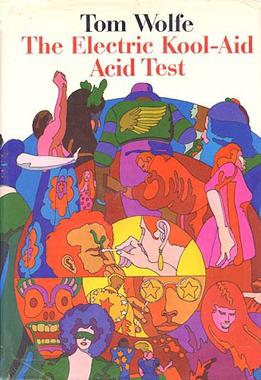
On February 4, 1968, Neal Cassady, inspiration for both the Beats and the Hippies died. Later in the year, The Electric Kool-Aid Acid Test by Tom Wolfe, was released, bringing Cassady yet more hipster celebrity, and I'm sure he appreciated it, really.
On the job as a lifeguard at the Downtown Nashville YMCA, I read, when it was safe, i.e when there was no one in the pool, or maybe a single middle-aged white male swimming laps. At other times I listened to the radio, via single earpiece, when it was safe to do that. When swim classes were in session, of course, the pool got my full attention.
The available music was pretty feeble. Top Forty radio had "Yummy, Yummy, Yummy I've Got Love in My Tummy" on high rotation for weeks. And no matter how much I liked both The Graduate and Simon and Garfunkle, there are only so many times I can listen to "Mrs. Robinson" without thinking of opening a vein. On somebody.
There was a light classical station that I could barely get, plus a couple of "easy listening" stations. I became quite fond of the Baja Marimba Band, and "The Call of the Wild Goose." There was also some instrumental group that did a version of "Everybody Loves My Baby" that was heavy on the kettle drum. Maybe I'll try to find out who did that sometime.
On February 8, a civil rights protest staged at a white-only bowling alley in Orangeburg, South Carolina was broken-up by highway patrolmen, leading to the deaths of 3 college students. Drop in the bucket, really. Or, as some were describing it at the time, "a good start."
There were several versions of "The Best is Yet to Come," on the easy listening rotation, too, including the Sinatra rendition.
On February 8, 1968, the National Socialist White Peoples Party filed suit to obtain a Nazi burial for George Lincoln Rockwell’s remains at any National Cemetery. Rockwell had been assassinated in 1967, and there had been a public standoff sometime later about a previous attempt to bury his body at a National Cemetery, with members of the NSWPP demanding to be allowed to wear their Nazi insignia at the ceremony, and the cemetery officials refusing. This was all orchestrated by one of Rockwell's previous subordinates, Matt Koehl.
I wrote a bit of doggerel about the cemetery incident, using "Old King Cole" as a template. It was, to my recollection, dreadful, but it does have the distinction of being one of the least dreadful bits of poetry I wrote at the time. I was to give up all such attempts at poetry within a few years, and the world is a much better place for it.
On March 12, U.S. President Lyndon B. Johnson beat antiwar candidate Eugene J. McCarthy in the New Hampshire Democratic primary, but won by only 7 percentage points. Moreover, McCarthy won the lion's share, 20, of New Hampshire's convention delegates.
On March 31, U.S. President Lyndon B. Johnson announced he would not seek re-election. He'd been on the receiving end of the chant, "Hey, hey, LBJ, how many kids have you killed today?" for quite a while at that point. I remember thinking at the time, "Holy crap! I think he's quitting because they hurt his feelings." That would not prove to be a problem with his successor.
I was writing a lot at this point, another one of the activities that I used to fill the "empty pool time." My lifeguard duties were still somewhat contained, by attending high school and by the existence of other lifeguards to share the duties. So I was working maybe 3-4 hours 3 or 4 times a week.
One of the things I began about this time was a Tolkienesque fantasy. Much later, after adding a lot more stuff stolen from Jack Vance, Fritz Leiber, and Henry Kuttner, it became Book of Shadows, my first novel. Thank god, I removed the poetry.
On March 18, under heavy pressure from France's ongoing conversion of dollars to gold, the Congress of the United States repealed the requirement for a gold reserve to back U.S. currency. The dollar then began a series of sliding pegs against gold, that is to say, a series of "devaluations." These eventually ceased in 1975, when the gold/dollar link was broken completely, private citizens were again allowed to own gold, and the dollar floated against other world currencies.
I was keenly interested in business and finance, going so far as to have a subscription to Fortune magazine, and reading books on accounting. On the other hand, I was reading books on just about everything.
On March 20, Charles Chaplin Jr., American actor (b. 1925), died.
On March 22, Daniel Cohn-Bendit and seven other students occupied Administrative offices of Nanterre, launching France into a state of revolution in the month of May.
On March 16, the My Lai massacre occurred as American troops kill several hundred (300-500) civilians. The American public did not learn of the event for many months.
On March 14, nerve gas leaked from the U.S. Army Dugway Proving Ground near Skull Valley, Utah and killed a number of sheep.
On March 27, Yuri Gagarin, cosmonaut and the first man in orbit died in a plane crash.
In National Forensic League meets of the period, there were various categories of competition, generally segregated by gender. For most of the categories, such as "Boys' Original", there was a prepared text, which you could deliver until it won a first place prize, and then it had to be retired. Other categories, which had much lower status (and fewer NFL "points" accruing to victories) used someone else's words.
After burning through a few "Original" speeches, my forensic buddy Phil and I got either lazy or more confident, depending upon interpretation. The highest status category was "Extemporaneous" which got a subject handed to you, and you then had (as I recall) fifteen minutes to prepare the speech. Obviously the most you could really get was an outline. But that was enough, really.
It helped that the meet organizers weren't really high in the imagination department; they usually set topics cleaned from recent issues of Time, Newsweek, or U.S. News and World Reports. It was no great trick to locate the relevant newsmagazine, and to pull facts from it. What took some talent was coming up with a speech that didn't sound like you were just reading from a newsmagazine. Also, I needed something to keep me from getting bored with the deal. So I'd be looking for some odd take on the thing. That tended to make me stand out from the crowd, and often the judges appreciated that.
It also gave me an incentive to keep up with the newsmagazines, which was good, because there was plenty of incentive to just numb out from the goings on in the world.
On April 4, Martin Luther King, Jr. was assassinated at the Lorraine Motel in Memphis, Tennessee. Riots erupt in major American cities for several days afterward. The Asshole who Killed Martin Luthor King was arrested for the murder on June 8th. TAWKMLK first confessed to the crime, then withdrew it, then pled guilty (to avoid the death penalty), and was sentenced to 99 years in prison. He then spent the remainder of his life trying to withdraw his plea and obtain a trial. He also gave interviews that tried to hint at a conspiracy. If you think there was a conspiracy, blame the death penalty for TAWKMLK not getting his trial. I think he was just a lying asshole, myself. TAWKMLK later made a book deal with writer William Bradford Huie (The Death of Private Slovik, The Revolt of Mamie Stover, The Americanization of Emily), which produced a work that I will not name.
Nashville did not have riots, and both the black and white communities patted themselves on the back for it, and even patted each other's backs a bit, which was a good thing.
There was a curfew, however. One of my dates put me up against the curfew when driving home. I don't think I worried much about it. I was more interested in the end-of-the-world sensation produced by driving from West Nashville to East Nashville without seeing a single other vehicle.
On April 6, a shootout between Black Panthers and Oakland police resulted in several arrests and deaths, including 17-year-old Panther Bobby Hutton.
In late April, student protesters at Columbia University in New York City took over administration buildings and shut down the university.
On April 29, the musical Hair officially opened on Broadway. For our sins, we were subjected to "The Age of Aquarius" on the radio for what seemed like months.
In May, student and worker strikes in France, sometimes referred to as the French May, nearly brought down the French government.

On May 17, the Catonsville Nine entered the Selective Service offices in Catonsville, Maryland, took dozens of selective service draft records, and burned them with napalm as a protest against the Vietnam War.
On May 19, Nigerian forces captured Port Harcourt and formed a ring around Biafrans. This contributed to a humanitarian disaster as the surrounded population was already suffering with hunger and starvation.
On May 22, the U.S. nuclear-powered submarine Scorpion sank with 99 men aboard, 400 miles southwest of the Azores.
In early June, 1968, I graduated from Donelson High School, in Donelson, Tennessee.
Pete,
Well, that's 12 years of school gone and we've been together most of them. What's more, there's at least 4 more years coming. Make the most of them. I'd like to think that I know you pretty well – better than most, anyway. Anyway, I know enough so that I can see you've got a great future. Let some more people find out about you – you're great. But then again, no one needed to tell you that.
--Mark
More later.
[Many of the historical events here have been memory refreshed via Wikipedia]
By early 1968, based on offered financial aid (I needed a lot of it), and distance from Tennessee (I needed a lot of that, too), I'd settled on attending Rensselear Polytechnic Institute in upstate New York.
On January 5, 1968, Alexander Dubček was elected leader of the Communist Party in Czechoslovakia. His term became known as the "Prague Spring," a time of general loosening of Iron Curtain repression. The thaw officially ended on August 20 when 200,000 Warsaw Pact troops and 5,000 tanks invade Czechoslovakia.
Once I'd received my acceptance to RPI, my time in Donelson became a holding pattern. I made a couple of half-hearted attempts at dating, both girls from the tony Belle Meade district on the west side of town, out past Vanderbuilt University, but my head was not in the game. Or in any game, really. I was so out of there.
On January 30, in Vietnam, the Tet Offensive began, as Viet Cong forces launched a series of surprise attacks across South Vietnam. The Tet Offensive was the "light at the end of the tunnel is an oncoming train" moment in the Vietnam War, and surprised everyone who'd thought that the war was nearing victory, which is to say, that fraction of the people whom you can fool all of the time. On January 31, Viet Cong soldiers attack the United States Embassy in Saigon. The Tet Offensive does halt until February 24.

On February 1 a Viet Cong officer was executed by Nguyen Ngoc Loan, a South Vietnamese National Police Chief. The event was photographed by Eddie Adams. The photo made headlines around the world, eventually winning the 1969 Pulitzer Prize. Americans are horrified, shocked, simply shocked, that bad things are done during a war.
One of my dates in January would have been to see "The Graduate." I liked it, as it seemed to speak to the disconnected feeling I had about everything, though, truth to tell, I expected to reconnect in college.
My date didn't like it, although she thought that Anne Bancroft was still pretty hot. I don't think she used those words, though.
January 13 - Johnny Cash records "Live at Folsom Prison".
January 22 - Rowan & Martin's Laugh-In debuts on NBC.
On February 4, 1968, Neal Cassady, inspiration for both the Beats and the Hippies died. Later in the year, The Electric Kool-Aid Acid Test by Tom Wolfe, was released, bringing Cassady yet more hipster celebrity, and I'm sure he appreciated it, really.
On the job as a lifeguard at the Downtown Nashville YMCA, I read, when it was safe, i.e when there was no one in the pool, or maybe a single middle-aged white male swimming laps. At other times I listened to the radio, via single earpiece, when it was safe to do that. When swim classes were in session, of course, the pool got my full attention.
The available music was pretty feeble. Top Forty radio had "Yummy, Yummy, Yummy I've Got Love in My Tummy" on high rotation for weeks. And no matter how much I liked both The Graduate and Simon and Garfunkle, there are only so many times I can listen to "Mrs. Robinson" without thinking of opening a vein. On somebody.
There was a light classical station that I could barely get, plus a couple of "easy listening" stations. I became quite fond of the Baja Marimba Band, and "The Call of the Wild Goose." There was also some instrumental group that did a version of "Everybody Loves My Baby" that was heavy on the kettle drum. Maybe I'll try to find out who did that sometime.
On February 8, a civil rights protest staged at a white-only bowling alley in Orangeburg, South Carolina was broken-up by highway patrolmen, leading to the deaths of 3 college students. Drop in the bucket, really. Or, as some were describing it at the time, "a good start."
There were several versions of "The Best is Yet to Come," on the easy listening rotation, too, including the Sinatra rendition.
On February 8, 1968, the National Socialist White Peoples Party filed suit to obtain a Nazi burial for George Lincoln Rockwell’s remains at any National Cemetery. Rockwell had been assassinated in 1967, and there had been a public standoff sometime later about a previous attempt to bury his body at a National Cemetery, with members of the NSWPP demanding to be allowed to wear their Nazi insignia at the ceremony, and the cemetery officials refusing. This was all orchestrated by one of Rockwell's previous subordinates, Matt Koehl.
I wrote a bit of doggerel about the cemetery incident, using "Old King Cole" as a template. It was, to my recollection, dreadful, but it does have the distinction of being one of the least dreadful bits of poetry I wrote at the time. I was to give up all such attempts at poetry within a few years, and the world is a much better place for it.
On March 12, U.S. President Lyndon B. Johnson beat antiwar candidate Eugene J. McCarthy in the New Hampshire Democratic primary, but won by only 7 percentage points. Moreover, McCarthy won the lion's share, 20, of New Hampshire's convention delegates.
On March 31, U.S. President Lyndon B. Johnson announced he would not seek re-election. He'd been on the receiving end of the chant, "Hey, hey, LBJ, how many kids have you killed today?" for quite a while at that point. I remember thinking at the time, "Holy crap! I think he's quitting because they hurt his feelings." That would not prove to be a problem with his successor.
I was writing a lot at this point, another one of the activities that I used to fill the "empty pool time." My lifeguard duties were still somewhat contained, by attending high school and by the existence of other lifeguards to share the duties. So I was working maybe 3-4 hours 3 or 4 times a week.
One of the things I began about this time was a Tolkienesque fantasy. Much later, after adding a lot more stuff stolen from Jack Vance, Fritz Leiber, and Henry Kuttner, it became Book of Shadows, my first novel. Thank god, I removed the poetry.
On March 18, under heavy pressure from France's ongoing conversion of dollars to gold, the Congress of the United States repealed the requirement for a gold reserve to back U.S. currency. The dollar then began a series of sliding pegs against gold, that is to say, a series of "devaluations." These eventually ceased in 1975, when the gold/dollar link was broken completely, private citizens were again allowed to own gold, and the dollar floated against other world currencies.
I was keenly interested in business and finance, going so far as to have a subscription to Fortune magazine, and reading books on accounting. On the other hand, I was reading books on just about everything.
On March 20, Charles Chaplin Jr., American actor (b. 1925), died.
On March 22, Daniel Cohn-Bendit and seven other students occupied Administrative offices of Nanterre, launching France into a state of revolution in the month of May.
On March 16, the My Lai massacre occurred as American troops kill several hundred (300-500) civilians. The American public did not learn of the event for many months.
On March 14, nerve gas leaked from the U.S. Army Dugway Proving Ground near Skull Valley, Utah and killed a number of sheep.
On March 27, Yuri Gagarin, cosmonaut and the first man in orbit died in a plane crash.
In National Forensic League meets of the period, there were various categories of competition, generally segregated by gender. For most of the categories, such as "Boys' Original", there was a prepared text, which you could deliver until it won a first place prize, and then it had to be retired. Other categories, which had much lower status (and fewer NFL "points" accruing to victories) used someone else's words.
After burning through a few "Original" speeches, my forensic buddy Phil and I got either lazy or more confident, depending upon interpretation. The highest status category was "Extemporaneous" which got a subject handed to you, and you then had (as I recall) fifteen minutes to prepare the speech. Obviously the most you could really get was an outline. But that was enough, really.
It helped that the meet organizers weren't really high in the imagination department; they usually set topics cleaned from recent issues of Time, Newsweek, or U.S. News and World Reports. It was no great trick to locate the relevant newsmagazine, and to pull facts from it. What took some talent was coming up with a speech that didn't sound like you were just reading from a newsmagazine. Also, I needed something to keep me from getting bored with the deal. So I'd be looking for some odd take on the thing. That tended to make me stand out from the crowd, and often the judges appreciated that.
It also gave me an incentive to keep up with the newsmagazines, which was good, because there was plenty of incentive to just numb out from the goings on in the world.
On April 4, Martin Luther King, Jr. was assassinated at the Lorraine Motel in Memphis, Tennessee. Riots erupt in major American cities for several days afterward. The Asshole who Killed Martin Luthor King was arrested for the murder on June 8th. TAWKMLK first confessed to the crime, then withdrew it, then pled guilty (to avoid the death penalty), and was sentenced to 99 years in prison. He then spent the remainder of his life trying to withdraw his plea and obtain a trial. He also gave interviews that tried to hint at a conspiracy. If you think there was a conspiracy, blame the death penalty for TAWKMLK not getting his trial. I think he was just a lying asshole, myself. TAWKMLK later made a book deal with writer William Bradford Huie (The Death of Private Slovik, The Revolt of Mamie Stover, The Americanization of Emily), which produced a work that I will not name.
Nashville did not have riots, and both the black and white communities patted themselves on the back for it, and even patted each other's backs a bit, which was a good thing.
There was a curfew, however. One of my dates put me up against the curfew when driving home. I don't think I worried much about it. I was more interested in the end-of-the-world sensation produced by driving from West Nashville to East Nashville without seeing a single other vehicle.
On April 6, a shootout between Black Panthers and Oakland police resulted in several arrests and deaths, including 17-year-old Panther Bobby Hutton.
In late April, student protesters at Columbia University in New York City took over administration buildings and shut down the university.
On April 29, the musical Hair officially opened on Broadway. For our sins, we were subjected to "The Age of Aquarius" on the radio for what seemed like months.
In May, student and worker strikes in France, sometimes referred to as the French May, nearly brought down the French government.

On May 17, the Catonsville Nine entered the Selective Service offices in Catonsville, Maryland, took dozens of selective service draft records, and burned them with napalm as a protest against the Vietnam War.
On May 19, Nigerian forces captured Port Harcourt and formed a ring around Biafrans. This contributed to a humanitarian disaster as the surrounded population was already suffering with hunger and starvation.
On May 22, the U.S. nuclear-powered submarine Scorpion sank with 99 men aboard, 400 miles southwest of the Azores.
In early June, 1968, I graduated from Donelson High School, in Donelson, Tennessee.
Pete,
Well, that's 12 years of school gone and we've been together most of them. What's more, there's at least 4 more years coming. Make the most of them. I'd like to think that I know you pretty well – better than most, anyway. Anyway, I know enough so that I can see you've got a great future. Let some more people find out about you – you're great. But then again, no one needed to tell you that.
--Mark
More later.
[Many of the historical events here have been memory refreshed via Wikipedia]
Wednesday, December 5, 2007
The Nashville YMCA - Photo

In Jamais Vu, I did some memory recovery on the Downtown Nashville YMCA of my youth. I also spent some time trying to locate a photograph of the building. This is the best I could find:
The black cube was, as I recall, a bank building that went up in the mid-60s, still shorter than the L&C Tower, although there was a building behind the camera (possibly from which this photo was taken), that was taller by the time of this photo in 1972.
The small bit of building you can see in the lower right corner is the roof of the Downtown YMCA.
The photographer was Charles W. Warterfield, and this image is part of a special digital collection of the Nashville Public Library.
The Right Tool for the Right Job
I led a highly compartmentalized existence in high school. At the Downtown Nashville YMCA I was a lifeguard, swam and wrestled competitively, did gymnastics, ran the track, lifted weights, and played pickup basketball. At Donelson High School, I was a dweeby little nerd, or, since those terms were not in use, a brain. Brains were considered to be non-athletic, and I fulfilled that stereotype to the extent that I just didn’t care much for competitive team sports, especially spectator team sports. So I didn’t go out for varsity teams (which would have meant after school practice that would have interfered with my trips to the Y), didn’t attend football/baseball/basketball games or the pep rallies associated with them. In gym class, while I wasn’t the last guy chosen, I wasn’t the first either, and I didn’t really care all that much.
Nevertheless, I did play the games, to the best of my abilities, which may have been why I slipped on the gravel when running to first. Later, there were some jokes about how it’s not correct play to slide into first, but at the time I think that the sight of blood temporarily suppressed the jokes.
And there was blood. We were all dressed in the standard gym attire: tennis shoes, gym shorts and t-shirt. I’d made a three-point landing, both knees and an elbow and they were bad scrapes. The blood began to trickle down my legs pretty much as soon as I stood up. Coach Ellis cocked his head in the direction of the school and said, “Come with me.”
We went to the School Nurse’s office, but she wasn’t there. So I dabbed away the blood, whereupon Coach Ellis took a bottle of iodine and proceeded to pour it directly onto the raw injuries.
I don’t remember if I whined, yelped, said “Oww” or what, but Coach looked at me directly and said, “You’re not real good at handling pain, are you, Pete?” (Note: I was “Pete” until I left Nashville to go to RPI).
I developed some impressive scabs, and I had to curtail swimming for a couple of weeks, but the scrapes healed up without scars, so all turned out okay.
Some twenty-odd years later, I attended my twenty year high school reunion. Not everybody I wanted to see was there, so I made a point of going out to visit Jim and Betty in LaVerne. Jim had been on the football team, so he knew the coaching staff better than I. At one point, he mentioned that he’d seen Coach Ellis a few months back and they’d gone out to have a few beers after work.
“Yeah,” said Jim. “He gave up coaching and went to work for a bank. It’s a lot more money than coaching high school, and he told me that he really enjoys his work.”
“So what does he do there?” I asked.
“He’s the loan foreclosure officer.”
“Oh,” I said, because there really wasn’t anything else to say.
Nevertheless, I did play the games, to the best of my abilities, which may have been why I slipped on the gravel when running to first. Later, there were some jokes about how it’s not correct play to slide into first, but at the time I think that the sight of blood temporarily suppressed the jokes.
And there was blood. We were all dressed in the standard gym attire: tennis shoes, gym shorts and t-shirt. I’d made a three-point landing, both knees and an elbow and they were bad scrapes. The blood began to trickle down my legs pretty much as soon as I stood up. Coach Ellis cocked his head in the direction of the school and said, “Come with me.”
We went to the School Nurse’s office, but she wasn’t there. So I dabbed away the blood, whereupon Coach Ellis took a bottle of iodine and proceeded to pour it directly onto the raw injuries.
I don’t remember if I whined, yelped, said “Oww” or what, but Coach looked at me directly and said, “You’re not real good at handling pain, are you, Pete?” (Note: I was “Pete” until I left Nashville to go to RPI).
I developed some impressive scabs, and I had to curtail swimming for a couple of weeks, but the scrapes healed up without scars, so all turned out okay.
Some twenty-odd years later, I attended my twenty year high school reunion. Not everybody I wanted to see was there, so I made a point of going out to visit Jim and Betty in LaVerne. Jim had been on the football team, so he knew the coaching staff better than I. At one point, he mentioned that he’d seen Coach Ellis a few months back and they’d gone out to have a few beers after work.
“Yeah,” said Jim. “He gave up coaching and went to work for a bank. It’s a lot more money than coaching high school, and he told me that he really enjoys his work.”
“So what does he do there?” I asked.
“He’s the loan foreclosure officer.”
“Oh,” I said, because there really wasn’t anything else to say.
Tuesday, December 4, 2007
Deck Us All with Boston Charlie
To get us in the holiday spirit.
The song “Vamp in the Middle” (from whose title I take the title of my short story in Helix) come from the album Aereo-Plain by John Hartford. There also appears on that album, this seemingly cryptic spoken-word piece, entitled “Station Break:”
The alternate version, somewhat rarer, was performed by Beauregard Chaulmoogra Frontenac de Montmingle Bugleboy, the dog/cop:
The song “Vamp in the Middle” (from whose title I take the title of my short story in Helix) come from the album Aereo-Plain by John Hartford. There also appears on that album, this seemingly cryptic spoken-word piece, entitled “Station Break:”
Bill Randall 650, Dorothy S. Ma'm, the Axlewide and Peppermint Endurance Company in Bashful Johnny C, Home of the Grand Ol' Conglomeration, Fannie Hill University and the Bathtub of the South. It's 7:30.
Hartford was a Nashville disk jockey before he found fame and fortune as a singer song-writer, then respect as a flame keeper of “old timey” music, and finally death from non-Hodgkin's Lymphoma at 63, in 2001. The words to “Station Break” decoded:
Clear Channel 650, WSM, the National Life and Accident Insurance Company, in Nashville, Tennessee, home of the Grand Ol’ Opry, Vanderbuilt University, and the Athens of the South. It’s 7:30.
We geezers, of course, all know the Pogo example, sung by Albert Alligator, from which the title of this essay is taken:
Deck us all with Boston Charlie,
Walla Walla, Wash., an' Kalamazoo!
Nora's freezin' on the trolley,
Swaller dollar cauliflower alley-garoo!
Don't we know archaic barrel,
Lullaby Lilla boy, Louisville Lou?
Trolley Molly don't love Harold,
Boola boola Pensacoola hullabaloo!
The alternate version, somewhat rarer, was performed by Beauregard Chaulmoogra Frontenac de Montmingle Bugleboy, the dog/cop:
Bark us all bow-wows of folly,
Polly wolly cracker n' too-da-loo!
Hunky Dory's pop is lolly gaggin' on the wagon,
Willy, folly go through!
Donkey Bonny brays a carol,
Antelope Cantaloup, 'lope with you!
Chollie's collie barks at Barrow,
Harum scarum five alarum bung-a-loo!
Finally, I was recently moved to recover a memory of this pre-school version of The Pledge:
I pledge our Legions to the Flag, of the United Stakes of America. And Toothery Public for Richard Stands, one Nation, Undergod, Indy visible, with liver tea and just us, for all.
The name for this sort of thing is Mondegreen. Mondegreen's are usually supposed to be accidental, and the intentional versions above don't really pass the "sounds like" test of a true Mondegreen. I just wanted the Johnny Hartford thing to be documented, because apparently the CD/LP is rare, the lyrics hard to locate, and nobody else seems to know what they mean.
Tuesday, November 6, 2007
Jamais vu
The 1987 World Fantasy Convention was held in Nashville, Tennessee, at the downtown Hyatt Regency Hotel. The building has changed hands and names several times since then. I think it goes by the name of Sheraton, now. It sits on Union St. between Capitol Blvd. and Seventh St., the former site of the Downtown Nashville YMCA.
As I’ve said before, the downtown Y was my “secure beachhead” (to borrow the concept from von Clausewitz’s “On War”) in my exploration and assault upon the world that existed outside of Donelson, Tennessee. Save for the year we lived in Kentucky, I attended YMCA gym and swim classes more or less continually (three times a week or more) from when I was 8 until 16, after having attended every summer from 6-8. It took me longer than usual to learn to swim, so I overcompensated to the extent that I was a lifeguard at the Y pool, beginning at about age 15 and continuing until I left for college.
The building cornerstone said 1912, as I recall, so it stood for well over half a century. It’s gone now, and I have a right to be nostalgic about it, dammit.
Whippersnappers.
Union St. near the Tennessee State Capitol is a fairly steep incline, such that the short block between Capitol and Seventh amounted to almost an entire floor of the YMCA building, with the first floor being below ground level as seen from the front of the building on Seventh. The Seventh St. entrance was the lobby for the Y hotel, as well as being the level of the main locker room. The dormitory rooms, as the men’s hotel rooms were called, were tiny, with barely enough space for a bed and a small desk. I don’t recall seeing the inside of any of the dorm rooms for more than a glance from the hall, and then only on the second floor. It does cause me some puzzlement, these many years later, as to why I had the curiosity to wander over so much of the downtown city, yet remain completely oblivious to a large section of the Y building. I suspect it had to do with the idea that, within that building, I was under its rules, not all of them known to me, so I was much more timid in my explorations there. The reason for the timidity should be apparent: I didn’t want to do anything that annoyed anyone enough to banish me.
It may also have come from the gradual way I encountered the place. At the beginning, I didn’t even know that there was a front entrance. The Capitol Blvd. entrance was the one nearest the bus shelters (all Nashville public transit buses converged on a square in front of the State Capitol), and it was also the entrance to the lobby of the Boys Program lobby.
The lobby of the Boys Program had several ping pong tables, some card tables, a small vending machine nook, plus a couple of glassed in offices and the Program Desk. Past the lobby, through double doors was another large meeting room, with several smaller rooms on the periphery. To the left was a stairway (up to the Main Lobby), an elevator, and a cafeteria. Behind the elevator was a door that led to the pool, not the main doorway, but rather the one that the lifeguards used to dash over, place an order at the cafeteria, then, when it was ready, dash over to retrieve it. During slow periods, of course.
The main entrance for the Boys Program was just to the left of the Desk, and it led to the boys’ locker room and the pool showers. Past the showers was the pool, of course, the main reason why I was going downtown all those years. I mean, when I overcompensate, I overcompensate.
Still, there was a lot more to the Boys Program than swimming, and a lot more to the Y than the pool. Another door from the boys locker room went to the “small gym,” a half court basketball space, plus various gymnastics equipment, like an overhead bar, even parallel bars, rings, and a full size trampoline. I topped out fairly early in all the standard gymnastic endeavors. I managed a floor pike exactly once, though I managed to get proficient at both the overhead bar and p-bar kips, and could manage one on the rings when the stars were aligned. But full floor gymnastics were pretty well beyond my reach; I never got past the roundoff to the back flip. Back flips on the trampoline were not a problem but I was scared of the back ¾ for good reason: half the time I tried it I overshot and knocked the wind out of me.
I could, perhaps, have obsessed my way into becoming a competitive gymnast, but I had neither exceptional native talent nor burning desire. We did have one guy, nicknamed “Cotton” (even blonder than I was, which is hard to imagine) who once managed to place 5th in a regional tournament all by himself (if you totaled up his scores alone). The team as a whole placed 3rd.
Next to the small gym was a weight room. I learned to use the free weights (this was well pre-Nautilus), but again, not my obsession. Past the weight room were stairs that led to the Men’s Locker Room and then to the Big Gym.
And it was mighty big, you betcha. It had a full basketball court and three stories of overhead space. There were various extras on the sidelines, like an overhead ladder. One flight up was a mezzanine, for spectators during basketball games, and at the top was a circular track. I think the gym occupied most of three stories of the building, because I remember outside widows on two facing sides.
To the left as you entered the gym from the stairs were offices, a sun(lamp) room, a massage room, a dry sauna, and (I think) a steam room. This was the heart of the Men’s Athletic Club, which offered daytime exercise and such to Nashville Businessmen. Some while after I’d joined the “Leader’s Club,” a group of teenage boys that served as cheap semi-volunteer labor to assist the teaching of the boy’s classes and as a later source of lifeguards, I realized that the AC was the “connected” part of the enterprise, with links to the business and political community of Nashville.
Still farther up in the building there were three handball courts, which fulfilled every bit of the old Bill Cosby routine, with old men routinely beating the young ones by precision shots into the corner. We also played something called “paddle ball,” which had no relation to the ball-on-a-string thing. It was something of a precursor to racketball, only the ball used was a bit larger than a tennis ball and hollow rubber. The rackets were similar to tennis rackets but had a shorter handle. Sometimes we’d play handball with the paddle balls, especially if someone had forgotten his handball gloves. It was still a good way to pop a blood vessel in your hands, though.
The building was 8 stories, and the roof was tar and gravel. I know because we also went up to the roof a lot in summertime to get at least the hint of a tan. It was a little strange, after all; for a collection of teenagers in ongoing athletic pursuits, we were indoors almost all the time, save for the summer camps and later the Blue Ridge Leaders’ School (more on that some other time), where we’d get sunburns because, well, again, pale from the indoors.
For quite a few years in the 1950s and early 1960s, by far the tallest building in Nashville was the L&C Tower, a whopping 23 stories high. It was downhill from the Y, but of course the 23 stories meant that it was well above the roof of the YMCA building. But for years, it was the only one. Every other building in town was either below us or more or less at eye level. We could go as high as anyone else around. Almost.
As I’ve said before, the downtown Y was my “secure beachhead” (to borrow the concept from von Clausewitz’s “On War”) in my exploration and assault upon the world that existed outside of Donelson, Tennessee. Save for the year we lived in Kentucky, I attended YMCA gym and swim classes more or less continually (three times a week or more) from when I was 8 until 16, after having attended every summer from 6-8. It took me longer than usual to learn to swim, so I overcompensated to the extent that I was a lifeguard at the Y pool, beginning at about age 15 and continuing until I left for college.
The building cornerstone said 1912, as I recall, so it stood for well over half a century. It’s gone now, and I have a right to be nostalgic about it, dammit.
Whippersnappers.
Union St. near the Tennessee State Capitol is a fairly steep incline, such that the short block between Capitol and Seventh amounted to almost an entire floor of the YMCA building, with the first floor being below ground level as seen from the front of the building on Seventh. The Seventh St. entrance was the lobby for the Y hotel, as well as being the level of the main locker room. The dormitory rooms, as the men’s hotel rooms were called, were tiny, with barely enough space for a bed and a small desk. I don’t recall seeing the inside of any of the dorm rooms for more than a glance from the hall, and then only on the second floor. It does cause me some puzzlement, these many years later, as to why I had the curiosity to wander over so much of the downtown city, yet remain completely oblivious to a large section of the Y building. I suspect it had to do with the idea that, within that building, I was under its rules, not all of them known to me, so I was much more timid in my explorations there. The reason for the timidity should be apparent: I didn’t want to do anything that annoyed anyone enough to banish me.
It may also have come from the gradual way I encountered the place. At the beginning, I didn’t even know that there was a front entrance. The Capitol Blvd. entrance was the one nearest the bus shelters (all Nashville public transit buses converged on a square in front of the State Capitol), and it was also the entrance to the lobby of the Boys Program lobby.
The lobby of the Boys Program had several ping pong tables, some card tables, a small vending machine nook, plus a couple of glassed in offices and the Program Desk. Past the lobby, through double doors was another large meeting room, with several smaller rooms on the periphery. To the left was a stairway (up to the Main Lobby), an elevator, and a cafeteria. Behind the elevator was a door that led to the pool, not the main doorway, but rather the one that the lifeguards used to dash over, place an order at the cafeteria, then, when it was ready, dash over to retrieve it. During slow periods, of course.
The main entrance for the Boys Program was just to the left of the Desk, and it led to the boys’ locker room and the pool showers. Past the showers was the pool, of course, the main reason why I was going downtown all those years. I mean, when I overcompensate, I overcompensate.
Still, there was a lot more to the Boys Program than swimming, and a lot more to the Y than the pool. Another door from the boys locker room went to the “small gym,” a half court basketball space, plus various gymnastics equipment, like an overhead bar, even parallel bars, rings, and a full size trampoline. I topped out fairly early in all the standard gymnastic endeavors. I managed a floor pike exactly once, though I managed to get proficient at both the overhead bar and p-bar kips, and could manage one on the rings when the stars were aligned. But full floor gymnastics were pretty well beyond my reach; I never got past the roundoff to the back flip. Back flips on the trampoline were not a problem but I was scared of the back ¾ for good reason: half the time I tried it I overshot and knocked the wind out of me.
I could, perhaps, have obsessed my way into becoming a competitive gymnast, but I had neither exceptional native talent nor burning desire. We did have one guy, nicknamed “Cotton” (even blonder than I was, which is hard to imagine) who once managed to place 5th in a regional tournament all by himself (if you totaled up his scores alone). The team as a whole placed 3rd.
Next to the small gym was a weight room. I learned to use the free weights (this was well pre-Nautilus), but again, not my obsession. Past the weight room were stairs that led to the Men’s Locker Room and then to the Big Gym.
And it was mighty big, you betcha. It had a full basketball court and three stories of overhead space. There were various extras on the sidelines, like an overhead ladder. One flight up was a mezzanine, for spectators during basketball games, and at the top was a circular track. I think the gym occupied most of three stories of the building, because I remember outside widows on two facing sides.
To the left as you entered the gym from the stairs were offices, a sun(lamp) room, a massage room, a dry sauna, and (I think) a steam room. This was the heart of the Men’s Athletic Club, which offered daytime exercise and such to Nashville Businessmen. Some while after I’d joined the “Leader’s Club,” a group of teenage boys that served as cheap semi-volunteer labor to assist the teaching of the boy’s classes and as a later source of lifeguards, I realized that the AC was the “connected” part of the enterprise, with links to the business and political community of Nashville.
Still farther up in the building there were three handball courts, which fulfilled every bit of the old Bill Cosby routine, with old men routinely beating the young ones by precision shots into the corner. We also played something called “paddle ball,” which had no relation to the ball-on-a-string thing. It was something of a precursor to racketball, only the ball used was a bit larger than a tennis ball and hollow rubber. The rackets were similar to tennis rackets but had a shorter handle. Sometimes we’d play handball with the paddle balls, especially if someone had forgotten his handball gloves. It was still a good way to pop a blood vessel in your hands, though.
The building was 8 stories, and the roof was tar and gravel. I know because we also went up to the roof a lot in summertime to get at least the hint of a tan. It was a little strange, after all; for a collection of teenagers in ongoing athletic pursuits, we were indoors almost all the time, save for the summer camps and later the Blue Ridge Leaders’ School (more on that some other time), where we’d get sunburns because, well, again, pale from the indoors.
For quite a few years in the 1950s and early 1960s, by far the tallest building in Nashville was the L&C Tower, a whopping 23 stories high. It was downhill from the Y, but of course the 23 stories meant that it was well above the roof of the YMCA building. But for years, it was the only one. Every other building in town was either below us or more or less at eye level. We could go as high as anyone else around. Almost.
Friday, November 2, 2007
Blind Item
Some say it's only a matter of time before an actress blows the whistle on this middle-aged moviemaker. When casting his last project, the silver-tongued, not unattractive manipulator went so fast from flirtation to outrageous passes to outright lewd behavior it left a couple of performers' heads spinning. The guy's tendency to unzip and demand all sorts of hanky-panky has become so talked about around town that many hot young performers are refusing to work on his movies because they're afraid they'll be branded as desperate and easy. – Movieline
In Nashville, when I was a teenager, there weren’t many places you could buy comics. There were a couple of drugstores in Donelson with comics racks, and that was about it. In Downtown Nashville, the pickings were even thinner, with the only comics sales venue within walking distance of the Downtown YMCA being the bus station.
I was told not to go to the bus station, my mother having heard a lurid tale or two. That’s a little funny in retrospect, knowing what I now know about the reputation of YMCA hotels as homosexual assignation spots. For the record, no one ever approached me at the bus station, and in all the years I was at the “Y” I received a total of one single proposition, when I was somewhere around 16-17. I politely declined, the fellow not being the type I’m attracted to, that type being, well, female.
Drugstores also carried the Hollywood gossip magazines, mostly tame things by today’s standards. I must have glanced through some of them from time to time, because I remember two stories that caught my eye. The first was cover billed as about “Jim Nabors’ Secret Heartache,” and the second concerned, “The Pain in Raymond Burr’s Past.” In the first case, the article divulged that Nabors had asthma, and the second noted that Raymond Burr had struggled with a weight problem when he was young. They were bait-and-switch articles, in other words, promising something scandalous, but delivering only yawns.
Much later, I learned that both Burr and Nabors were closeted homosexuals throughout their careers (Burr also married and apparently had a relationship with Natalie Wood, so we’ll leave the veil covering the full nature of his sexuality). So the bait-and-switch was also a wink-wink, nudge-nudge for anyone in the know.
I’m uncertain as to whether or not the magazine in question was the notorious Confidential Magazine, in which case the stories may have been blackmail threats as well, although that sort of thing was mostly early on in the magazine’s history, before they got sued to hell and gone by almost everybody. I mean, they lost a libel action to Liberace. How sloppy do you have to be, to call Liberace a homosexual, get sued, and lose?
The bait-and-switch articles only work if you have a cover for the lurid title as the bait, then the tepid story inside for the switch. If you only have a column to work with, or something too small for a full article, or if you really, really want the salaciousness but don’t want to get sued, you go with the blind item.
This TV superstar is young, pretty and living high on the hog, but she doesn't want to live alone. So she moved a platonic male friend into her fancy digs. He seems like a nice guy, but little does she know what he does when she's away working! First he gets himself high as a kite on drugs. Then, since he has a fetish for call girls, he calls sex magazine ads for the kinkiest gals he can find. He loves pain and pays extra for the girls to bring big sex toys. Where he gets the $300 and up to pay for these sessions is a mystery! Worst of all, the guy gets so drugged up he doesn't realize the call girls are getting into his famous roommate's private things and helping themselves. –Star
The blind item may not have been invented by Walter Winchell, Louella Parsons, and Hedda Hopper but they elevated it to an art form. It’s perfect, really. Totally libel-proof, since there are no names attached, and there need not be a grain of truth in it, just a touch of “truthiness,” scandalous behavior amongst the rich and famous.
But the blind item works best as a shroud for truth. I’ve slid into memoir quite a few times in these essays, and I’ve given some indication of my dancing around with the sex-and-drugs-and-rock-and-roll crowd from time to time ‘way back when (Really, I’ve given all that up. Would I lie?). In fact, there was a time when S&D&R&R had a few other things often appended to it in the common culture, like science fiction or comics, both mainstream and underground (underground comix, boy, there’s a term from the past). I like hanging out with writers, artists, and good looking women and if cheap thrills were to be had, well, in Woody Allen’s immortal line, “It’s all I could afford.”
But discretion, yes, good point, that. People have told me things and short of waterboarding, I think it ill-advised to tell tales out of school. But some of the things were just so cool, and well, by knowing them that makes me cool, right?
And there’s the rub, because as soon as you start thinking that way, the cool just evaporates and leaves behind something rather tacky. Winchell, Parsons, and Hopper, like today’s gossip mongers may be feared, or fascinating, or even monstrous, but they’ll never, ever, be cool, at least not in my dictionary.
So I’ll just do my little dance in the dead of a moonless night, maybe whisper a few things to Amy, or to a close friend, and leave the rest as fiction fodder. That’s actually all they ever are, because even the truest blind item is still fiction, and not very good fiction at that. It fails to convey the true shape of reality that the best fiction can convey.
Still, if I were to mention the phrase “The Greater Bay Area Co-Prosperity Sphere,” there are a few people who would still get a chuckle or give a little snort or remembrance. The possibilities seemed endless once, but it turned out they were merely combinatorial.
A funny thing happened when the glam, famous young wife of the equally glam, famous guy struggling to control his well-concealed drug habit, started turning up at New York self-help meetings. Her intentions were all pure and good, of course, as she was trying to support her hunky hubby in his withdrawal from cocaine and other nasty vices. But insiders on both coasts are abuzz at how close she has become to a fellow attendee of that same self-help group, the sexy executive husband of a well-known, substance-addicted Manhattan A-list socialite. Sure, it all started out innocently, with just two lost, sad souls trying to help each other through some harrowing times. But now their two-person extracurricular support group has flared into a two-person extracurricular support grope. – Hollywood Life
Monday, October 29, 2007
Nashville
As I drive from your pearly gates
I realize that I just can't stay
All those mountains, they kept you locked inside
And hid the truth from my slighted eyes…
I fell on my knees to kiss your land
But you are so far down
And I can't even see to stand
In Nashville
You forgot the human race
You see with half a mind
What colors hide the face
Nashville
I'd like to know your fate
I'd like to stay a while
But I've seen your lowered state…
Tennessee, like Caesar's Gaul, is divided into three parts.
East Tennessee is Appalachia; it has two real cities, Knoxville and Chattanooga. Chattanooga has a north Georgia feel to it, while Knoxville was historically the home to the Tennessee Republicans, who ran the state in the Reconstruction years, to be beaten back once the Southern Democrats wrested control of the region from the Damn Yankees, and their fellow travelers, carpetbaggers, in the jargon of resentment. The University of Tennessee, Knoxville is a major presence in the city; some sections are a bit like a southern University Town, perceived by the outlying region as horribly liberal, but really staid and conservative, just with different things to conserve.
West Tennessee is Mississippi River land, and the magnet city for West Tennessee is Memphis, which also serves as the cultural capitol of Mississippi. Cross the Tennessee river heading west towards Memphis and you have entered the Deep South, but I have little experience with the Tennessee version. I've spent far more time in south Georgia than I have in West Tennessee, and that's another kind of Deep South entirely.
There was a time, when I was still strongly connected to the lands of my youth, when I could place a Southerner within about 200 miles of their home by their accent, a South Carolina accent being so different from a North Alabama accent as to be apparent within a sentence or two. It's been a long time and I'm no longer calibrated for playing 'enry 'iggins, and besides, there has been so much southern migration that I doubt the old standards apply.
The third part of Tennessee is Middle Tennessee, and its capitol is also the state capitol, Nashville.
I was born and raised in Middle Tennessee, in Davidson County, and the county government merged with the Nashville city government when I was in high school. We lived primarily in Donelson, a suburb of Nashville, and did not leave until I was 18, with two minor exceptions. Our family lived for about a year in, and near, Greensboro, North Carolina. I started school in a small town outside of Greensboro named Summerfield. We moved back to Nashville two months after I started school, so I was the "new kid" in school in a town that I'd lived in for years.
The last time I was back in Nashville, we discovered that Donelson Elementary School, where I'd spent the first and second grade, had been turned into a nursing home. I briefly flashed on the idea of some fellow who'd attended Donelson Elementary now in that home, and how he might wake up at night terrified that there was going to be a test the next day, and he hadn't studied. Would it come as a relief to discover that he was merely old?
A new elementary school greeted us for the third grade; this was during the feverish construction during the Baby Boom, after all. So I attended Hickman elementary until about six weeks into the sixth grade, when the family moved to Russellville, Kentucky, where we stayed a little less than a year, because the bowling alley that my Dad had been hired to manage, failed. Still, the experience gave him something to put on his resume, so he wound up getting another job as an assistant manager at an alley in Donelson, then got a better job at Pla-Mor Lanes, near a 100 Oaks Shopping Mall off I-65, pretty much in Nashville proper, but not downtown (note the shopping mall). That job lasted until after I'd graduated high school. The family moved to Illinois while I was in college, because my grandmother got sick and (for good reason) Dad did not trust the few remaining relatives to take care of her.
So all of this is basic suburban white boy growing up, southern edition. Except for the wanderlust, if that's what it can be called.
I explored practically every neighborhood in Donelson, on foot, before I was 14. Sometimes I had the excuse of selling candy and cookies, to pay for going to YMCA camp. Sometimes it was to visit friends. But mostly it was just exploring the world. I walked from one end of Donelson to another, a fetch of about 2 miles, maybe 4 or 5 square miles worth of territory to memorize.
When I was eight, my parents gave me the choice of continuing with the Boy Scouts in Donelson, or going to the downtown Nashville YMCA three times a week. It was no contest, really. The Y had a pool, a gym, and it was downtown.
There were probably some rules about where I was allowed to go downtown. Right. That worked. The only thing that really limited my wanderings was the time limits; I did have to catch the bus to get back to Donelson at a reasonable hour. Once I extended the time limit, calling my folks to get permission to go to a movie. I forgot to mention that it was a double feature. By the time I got home my mother was literally worried sick, nearly to the throwing up and needing sedatives to unclench her stomach part. I was careful not to worry her like that again, but it was many years before I realized the sheer courage it took, on an ongoing basis, for her to let me make those trips downtown, at such a young age.
In high school, as a member of the Donelson High Forensics Club (more nerd points for me), I went on numerous trips to other schools, public speaking venues, etc. By then I had a driver's license, and I tended to date girls from other high schools, often from other forensics clubs, because they were smart, verbal, and not from my high school. Oftentimes they were considerably more upscale than I was, so I saw how the other 5% lived pretty often. On the flip side, at the YMCA, then later when I was doing day labor the summer after my freshman year in college, I saw the bottom 5% pretty frequently, too.
The major industries of Nashville are banking and insurance, religious publishing (that Bible in your hotel room had a good chance of being printed in Nashville), and country music/show business, in that order, with the music biz being a distant third. But it gets all the publicity, of course, partly because it runs in part on publicity. Then there's the glamour bit.
There was recently a short-lived "reality show" called "Nashville." I tried watching it once, then fell back and tried to sample it by putting it on a channel surfing rotation. Even that was unbearable. Okay, it's not fair to call it out; one major type of reality show is about putting hot twenty-somethings in some sort of group arrangement and generating whatever salacious interest can be generated. In "Nashville," the group arrangement came from the bunch trying to "make it in the music business," so it was trying to cross pollinate from the other sort of reality show, Ted Mack's…American Idol. The talent part of it was a dismal failure as well.
Robert Altman's "Nashville" suffered from a related definitional problem, though Altman, being a semi-genius, managed to make a decent movie. It had almost nothing to do with Nashville, of course, and everything to do with Los Angeles. Show biz people think that all show biz is like it is in Los Angeles. Maybe it is, but that isn't what Nashville is about.
Nashville, the reality show never got anywhere near to Nashville the city. Altman's Nashville managed one actual touch that rang true: practically every character in the film was in church on Sunday morning. Only the real outsiders were somewhere else.
I stopped going to church when I was 14, after "membership training" in the Methodist Church, and the whole process that was supposed to make me a member for life. Bless my folks for understanding that after all that, it's okay to say, "no more."
I haven't lived in Nashville for years. Maybe the place I knew is gone, but every time I've been back it looks like it's still there. I wonder if anyone sees it but me?
Now I'm leaving - I've got all these debts to pay
You know we all have our dues - I'll pay 'em some other place
I'd never ask that you pay me back
We all arrive with more - I left with less than I had
Your town is made for people passing through
A last chance for a cause I thought I knew
But, Nashville, you tell me what you're gonna do
With all your Southern style - it'll never pull you through
Nashville, I can't place no blame
But if you forget my face I'll never call your name again
(No, never again, never again)
--"Nashville," Amy Ray, The Indigo Girls
I realize that I just can't stay
All those mountains, they kept you locked inside
And hid the truth from my slighted eyes…
I fell on my knees to kiss your land
But you are so far down
And I can't even see to stand
In Nashville
You forgot the human race
You see with half a mind
What colors hide the face
Nashville
I'd like to know your fate
I'd like to stay a while
But I've seen your lowered state…
Tennessee, like Caesar's Gaul, is divided into three parts.
East Tennessee is Appalachia; it has two real cities, Knoxville and Chattanooga. Chattanooga has a north Georgia feel to it, while Knoxville was historically the home to the Tennessee Republicans, who ran the state in the Reconstruction years, to be beaten back once the Southern Democrats wrested control of the region from the Damn Yankees, and their fellow travelers, carpetbaggers, in the jargon of resentment. The University of Tennessee, Knoxville is a major presence in the city; some sections are a bit like a southern University Town, perceived by the outlying region as horribly liberal, but really staid and conservative, just with different things to conserve.
West Tennessee is Mississippi River land, and the magnet city for West Tennessee is Memphis, which also serves as the cultural capitol of Mississippi. Cross the Tennessee river heading west towards Memphis and you have entered the Deep South, but I have little experience with the Tennessee version. I've spent far more time in south Georgia than I have in West Tennessee, and that's another kind of Deep South entirely.
There was a time, when I was still strongly connected to the lands of my youth, when I could place a Southerner within about 200 miles of their home by their accent, a South Carolina accent being so different from a North Alabama accent as to be apparent within a sentence or two. It's been a long time and I'm no longer calibrated for playing 'enry 'iggins, and besides, there has been so much southern migration that I doubt the old standards apply.
The third part of Tennessee is Middle Tennessee, and its capitol is also the state capitol, Nashville.
I was born and raised in Middle Tennessee, in Davidson County, and the county government merged with the Nashville city government when I was in high school. We lived primarily in Donelson, a suburb of Nashville, and did not leave until I was 18, with two minor exceptions. Our family lived for about a year in, and near, Greensboro, North Carolina. I started school in a small town outside of Greensboro named Summerfield. We moved back to Nashville two months after I started school, so I was the "new kid" in school in a town that I'd lived in for years.
The last time I was back in Nashville, we discovered that Donelson Elementary School, where I'd spent the first and second grade, had been turned into a nursing home. I briefly flashed on the idea of some fellow who'd attended Donelson Elementary now in that home, and how he might wake up at night terrified that there was going to be a test the next day, and he hadn't studied. Would it come as a relief to discover that he was merely old?
A new elementary school greeted us for the third grade; this was during the feverish construction during the Baby Boom, after all. So I attended Hickman elementary until about six weeks into the sixth grade, when the family moved to Russellville, Kentucky, where we stayed a little less than a year, because the bowling alley that my Dad had been hired to manage, failed. Still, the experience gave him something to put on his resume, so he wound up getting another job as an assistant manager at an alley in Donelson, then got a better job at Pla-Mor Lanes, near a 100 Oaks Shopping Mall off I-65, pretty much in Nashville proper, but not downtown (note the shopping mall). That job lasted until after I'd graduated high school. The family moved to Illinois while I was in college, because my grandmother got sick and (for good reason) Dad did not trust the few remaining relatives to take care of her.
So all of this is basic suburban white boy growing up, southern edition. Except for the wanderlust, if that's what it can be called.
I explored practically every neighborhood in Donelson, on foot, before I was 14. Sometimes I had the excuse of selling candy and cookies, to pay for going to YMCA camp. Sometimes it was to visit friends. But mostly it was just exploring the world. I walked from one end of Donelson to another, a fetch of about 2 miles, maybe 4 or 5 square miles worth of territory to memorize.
When I was eight, my parents gave me the choice of continuing with the Boy Scouts in Donelson, or going to the downtown Nashville YMCA three times a week. It was no contest, really. The Y had a pool, a gym, and it was downtown.
There were probably some rules about where I was allowed to go downtown. Right. That worked. The only thing that really limited my wanderings was the time limits; I did have to catch the bus to get back to Donelson at a reasonable hour. Once I extended the time limit, calling my folks to get permission to go to a movie. I forgot to mention that it was a double feature. By the time I got home my mother was literally worried sick, nearly to the throwing up and needing sedatives to unclench her stomach part. I was careful not to worry her like that again, but it was many years before I realized the sheer courage it took, on an ongoing basis, for her to let me make those trips downtown, at such a young age.
In high school, as a member of the Donelson High Forensics Club (more nerd points for me), I went on numerous trips to other schools, public speaking venues, etc. By then I had a driver's license, and I tended to date girls from other high schools, often from other forensics clubs, because they were smart, verbal, and not from my high school. Oftentimes they were considerably more upscale than I was, so I saw how the other 5% lived pretty often. On the flip side, at the YMCA, then later when I was doing day labor the summer after my freshman year in college, I saw the bottom 5% pretty frequently, too.
The major industries of Nashville are banking and insurance, religious publishing (that Bible in your hotel room had a good chance of being printed in Nashville), and country music/show business, in that order, with the music biz being a distant third. But it gets all the publicity, of course, partly because it runs in part on publicity. Then there's the glamour bit.
There was recently a short-lived "reality show" called "Nashville." I tried watching it once, then fell back and tried to sample it by putting it on a channel surfing rotation. Even that was unbearable. Okay, it's not fair to call it out; one major type of reality show is about putting hot twenty-somethings in some sort of group arrangement and generating whatever salacious interest can be generated. In "Nashville," the group arrangement came from the bunch trying to "make it in the music business," so it was trying to cross pollinate from the other sort of reality show, Ted Mack's…American Idol. The talent part of it was a dismal failure as well.
Robert Altman's "Nashville" suffered from a related definitional problem, though Altman, being a semi-genius, managed to make a decent movie. It had almost nothing to do with Nashville, of course, and everything to do with Los Angeles. Show biz people think that all show biz is like it is in Los Angeles. Maybe it is, but that isn't what Nashville is about.
Nashville, the reality show never got anywhere near to Nashville the city. Altman's Nashville managed one actual touch that rang true: practically every character in the film was in church on Sunday morning. Only the real outsiders were somewhere else.
I stopped going to church when I was 14, after "membership training" in the Methodist Church, and the whole process that was supposed to make me a member for life. Bless my folks for understanding that after all that, it's okay to say, "no more."
I haven't lived in Nashville for years. Maybe the place I knew is gone, but every time I've been back it looks like it's still there. I wonder if anyone sees it but me?
Now I'm leaving - I've got all these debts to pay
You know we all have our dues - I'll pay 'em some other place
I'd never ask that you pay me back
We all arrive with more - I left with less than I had
Your town is made for people passing through
A last chance for a cause I thought I knew
But, Nashville, you tell me what you're gonna do
With all your Southern style - it'll never pull you through
Nashville, I can't place no blame
But if you forget my face I'll never call your name again
(No, never again, never again)
--"Nashville," Amy Ray, The Indigo Girls
Subscribe to:
Posts (Atom)

